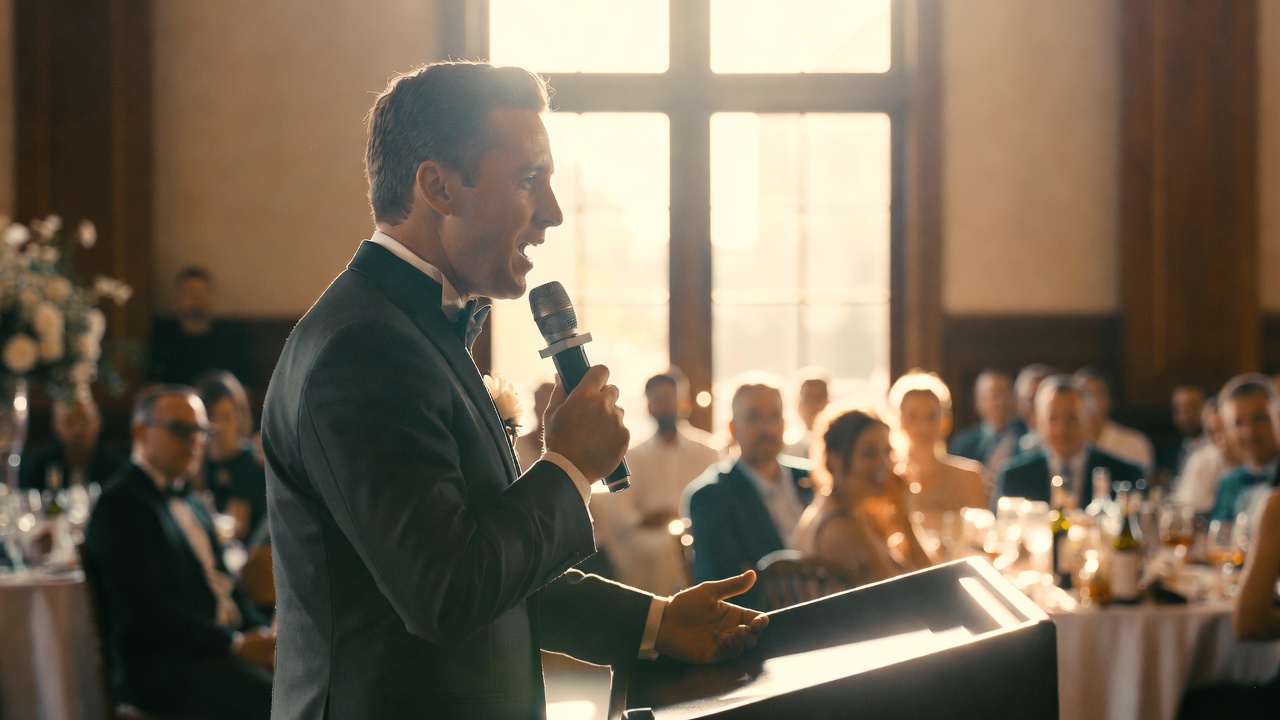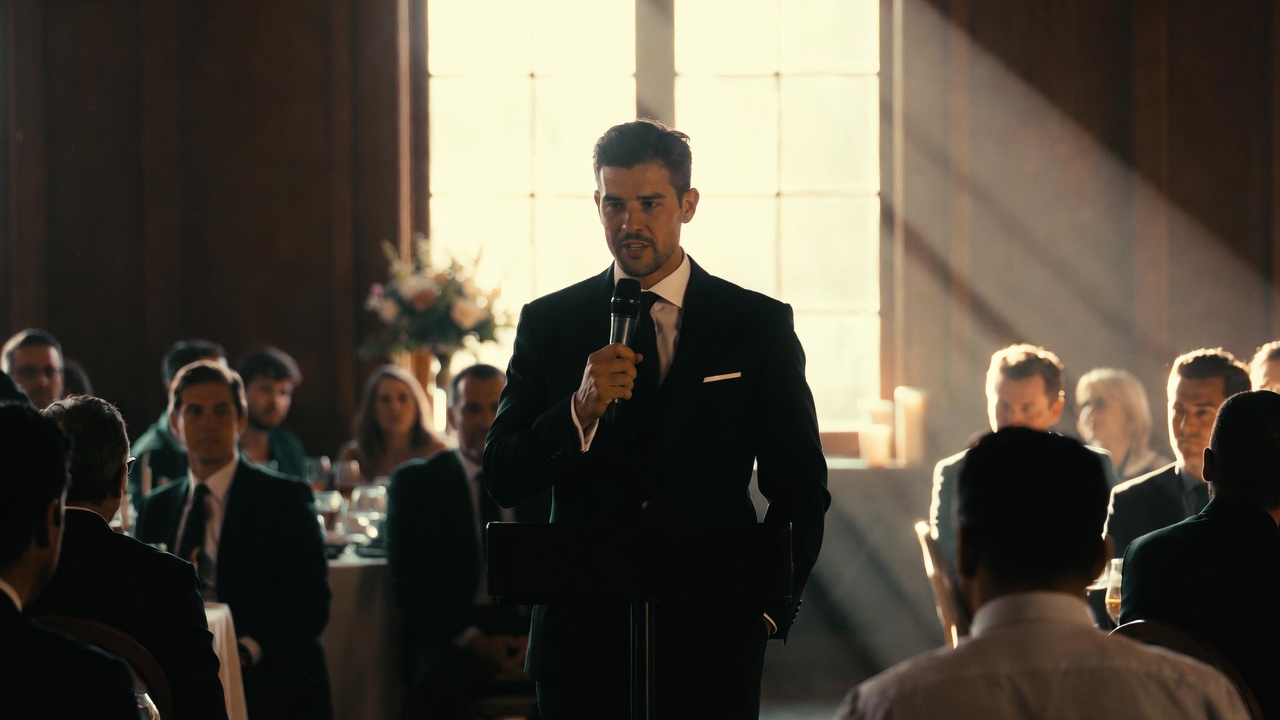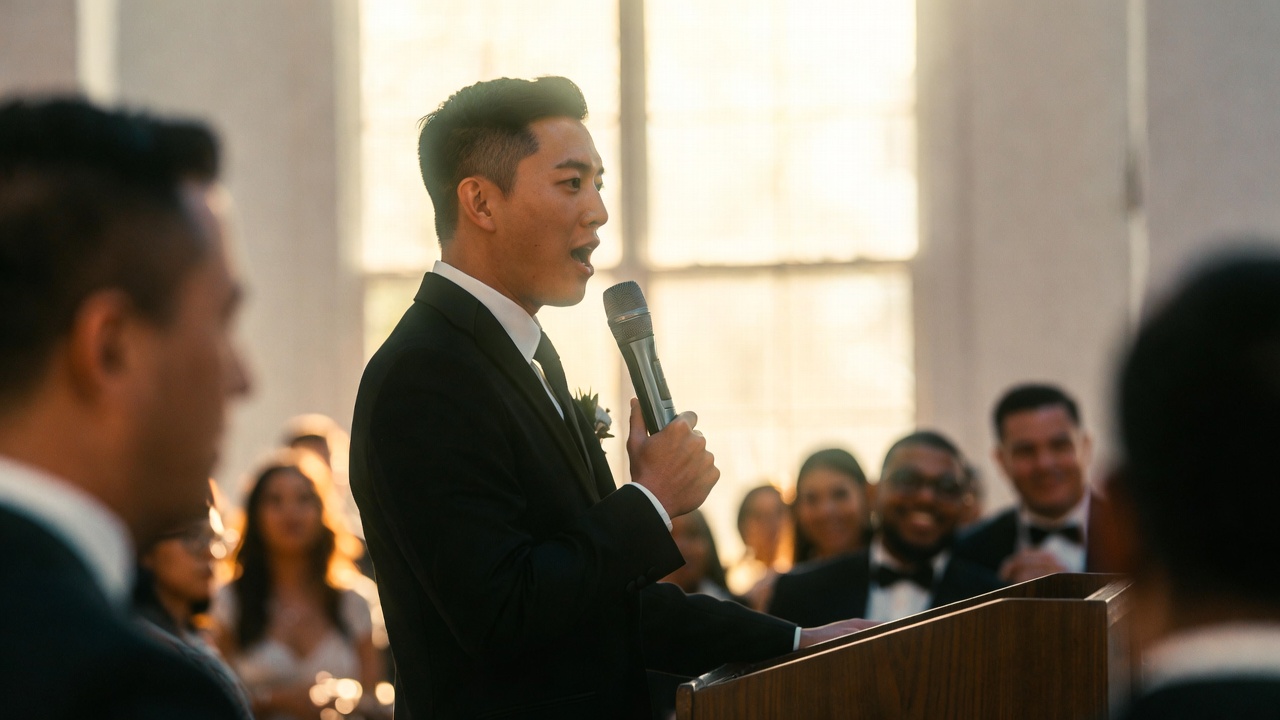
How to write a best man speech is less about finding clever lines and more about choosing the right story, the right length, and a toast the whole room can join. You already know the groom. You already have the material. This guide walks you from blank page to a speech you can actually deliver — without a roast that bombs or a greeting-card ending.
You will get a proven structure, prompts that pull real memories, and a simple drafting workflow. When you need models to study, pair this process with best man speech examples and ready-to-personalize speech templates — then rewrite every line in your own voice.
What Makes a Great Best Man Speech
A great best man speech does three jobs well. First, it makes the room feel who the groom really is — not a résumé of his job title. Second, it lands at least one moment of honesty that only a close friend could say. Third, it ends clean so people can raise a glass without squirming.
What it does not need: a long origin story of how you met in kindergarten, a list of every trip you ever took, or jokes that only work if half the table already knows the group chat lore. Specific beats generic. Kind beats cruel. Short enough to hold attention beats long enough to cover everything.
If humor is your natural gear, study the balance in lighthearted speech ideas — laugh, then land on heart before the toast. If you freeze at the first line, skip ahead later to best man speech openings and steal the shape, not the words.
The Best Man Speech Structure That Always Works
Use this skeleton every time. You can stretch or compress it, but do not invent a brand-new shape under pressure.
- Open with a line that is not your name. Grab the room in one sentence.
- Who you are — one short beat so strangers know why you are holding the mic (best man, brother, oldest friend). Ten seconds max.
- One strong story about the groom (or the couple). Prefer one deep story over three thin ones.
- Bridge to the partner — why this person is good for him, or why they work together. Warm, not sappy.
- Toast — a clear wish the room can raise a glass to.
Most receptions want something in the classic 3–4 minute range. If you are tight on time, cut subplots, not the toast. When you are ready to practice out loud, our delivery guide covers pace, nerves, and mic presence — separate from writing.
"I have known him long enough to know the difference between the version of him that performs for a room and the one who shows up when nobody is watching. Today I get to raise a glass to the person who makes that quieter version feel easy. To the two of you — may your home be loud with joy and soft with patience. Cheers."
Gather Your Stories Before You Write a Word
Do not open a blank document and wait for inspiration. Open a notes app and dump raw material for ten minutes. Answer these prompts in fragments — full sentences are optional:
- When did you first realize he was one of your people?
- What does he do when he thinks nobody is watching?
- What is the funniest story that still ends with him looking good — or at least forgiven?
- What is one hard season you saw him handle well?
- Why does his partner actually fit him, from your seat?
- What do you hope for them in five years, in plain language?
Circle the three lines that feel most true. One of them is your core story. One of them is your toast seed. The rest is optional color. If nothing funny appears, that is fine — heartfelt and short still wins. If everything funny is also mean, delete those lines before the draft even starts.
How to Write the Opening, Middle, and Toast
Opening. Avoid "For those who don't know me, I'm the best man." Try a true observation, a short setup for the story, or a warm line about the day. Save your title for after the hook.
"I was going to start with a joke about how long it took him to plan this wedding — then I remembered he planned exactly none of it, and that is why we love him."
Middle. Tell one story with a beginning, a turn, and a point. Name places and small details. Cut the preamble. If the story needs three minutes of backstory for one punchline, it is not the story.
"The night our flight got cancelled and he spent two hours finding everyone else a hotel before he booked his own — that is the version of him I hope you get to live with. Not the highlight reel. The Tuesday night version."
Toast. Make it short enough to remember under pressure. A good toast is a wish plus the couple — not a second speech. Look at them. Raise the glass. Stop talking.
"To Alex and Jordan — may you keep choosing each other on ordinary Tuesdays, keep laughing at the small stuff, and never run out of reasons to come home. Cheers."
Need more first lines and closers? See best man speech openings for bookends you can adapt.
Length, Tone, and What to Leave Out
Length. Aim for about 3–4 minutes spoken for a classic toast. Under two minutes can work if every line earns its place. Over five minutes usually means you are listing, not storytelling. Read aloud once with a timer before you call it done.
Tone. Match the couple and the room. Funny-then-true works for many grooms. Warm and grounded works for almost everyone. Deeply emotional works when the friendship is that kind of friendship — do not force tears you do not feel.
Leave out: exes, bachelor-party stories that need a content warning, anything that humiliates the partner, inside jokes with no payoff, and long apologies for being bad at speeches. Also leave out best man "duties" lectures — this page is about the words, not the logistics.
When you want models for a tighter cut, browse short examples alongside this process rather than stuffing every memory into one draft.
A Simple Drafting Workflow (Blank Page to Final)
Use this workflow so you do not rewrite forever:
- Day 1 — Dump. Ten minutes of raw notes from the prompts above. No editing.
- Day 1 — Skeleton. Fill the five-part structure with placeholders: open / who I am / story / bridge / toast.
- Day 2 — Draft. Write a messy full draft in one sitting. Do not polish mid-sentence.
- Day 2 — Cut. Remove anything that does not serve the story or the toast. Read aloud once.
- Day 3 — Polish. Fix names, transitions, and the last line. Time yourself. Practice standing up.
If you get stuck on shape, drop your notes into a fill-in structure from ready-to-personalize speech templates, then rewrite until it sounds like you. If you want to hear how similar ideas land in the room, compare against a few best man speech examples — borrow structure, never the details of someone else's friendship.
Final check before you stop: Does the opening grab? Is there one clear story? Does the partner feel included? Can you say the toast without looking down? If yes, you are ready to practice delivery.
For more inspiration on this topic, explore our guide to Short Best Man Speeches: Brief Speeches That Still Land — with examples, structure tips, and wording you can adapt for your ceremony.
If you want a related angle next, read ways to learn your speech for additional examples and ceremony-ready language.
If you want a related angle next, read Best Man Speech for Best Friend: Tips & Examples for additional examples and ceremony-ready language.
If you want a related angle next, read How to Introduce Yourself in a Best Man Speech for additional examples and ceremony-ready language.
For more inspiration on this topic, explore our guide to this guide on best man speech thank yous that stay kind, not long — with examples, structure tips, and wording you can adapt for your ceremony.
You may also find helpful wording in Best Man Speech as a Brother: Words That Land.
You may also find helpful wording in this guide on best man speech do's and don'ts that protect the room.
For more inspiration on this topic, explore our guide to Best Man Speech If You Don't Know the Bride: Lines That Land — with examples, structure tips, and wording you can adapt for your ceremony.
For more inspiration on this topic, explore our guide to more about best man speech format: a structure that always works — with examples, structure tips, and wording you can adapt for your ceremony.
If you want a related angle next, read more about best man speech first draft: get words on the page for additional examples and ceremony-ready language.
If you want a related angle next, read this guide on best man speech complimenting the bride: lines that land for additional examples and ceremony-ready language.
You may also find helpful wording in Best Man Speech About Bridesmaids: One Kind Mention.
If you want a related angle next, read more about best man speech about the bride: give her a real beat for additional examples and ceremony-ready language.
Couples often continue with more about best man speech wedding party: one kind beat, then toast after drafting their core promises.
Couples often continue with more about best man speech chatgpt: use the draft, then make it yours after drafting their core promises.
Frequently Asked Questions
How long should a best man speech be?
Most best man speeches land around three to four minutes when spoken aloud. Aim for one strong story plus a clear toast. If you are over five minutes, cut subplots before you cut sincerity.
How do I start a best man speech?
Start with a line that hooks the room — a true observation, a short setup, or a warm beat about the couple. Introduce yourself in one breath after the hook. Avoid opening with only your name and title.
What should I avoid saying in a best man speech?
Skip exes, humiliating stories, jokes that need a long apology, and anything that makes the partner the punchline. If it only works in the group chat, it does not belong on the mic.
Should a best man speech be funny?
Only if funny is natural for you and safe for the room. Humor works best when it ends on heart. A warm, grounded speech with one true story beats forced jokes every time.
How do I write a best man speech if I am not a writer?
You do not need literary talent. You need one real story, a simple structure, and a toast you can say under pressure. Dump memories first, then fill the skeleton. Read every draft out loud.
Can I use a template for my best man speech?
Yes — as a skeleton, not a script. Fill-in templates help you start. Replace every placeholder with your names, your story, and your toast so it cannot sound like it belongs to another wedding.