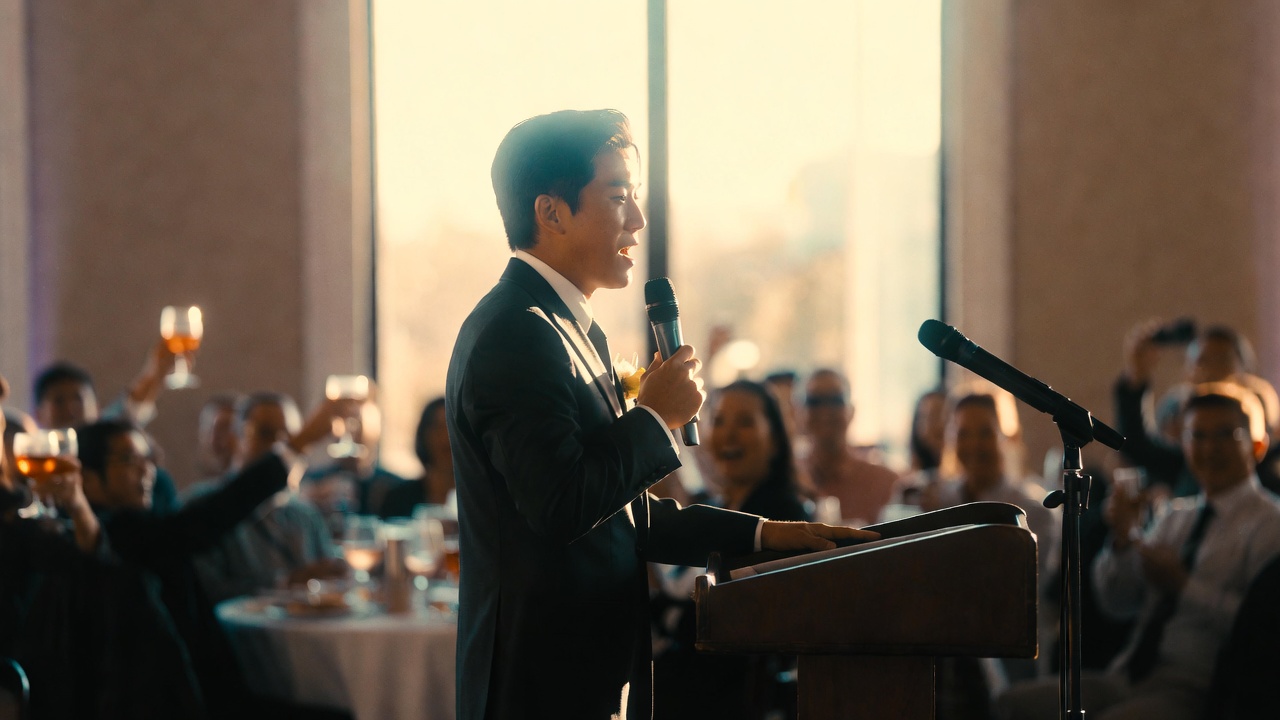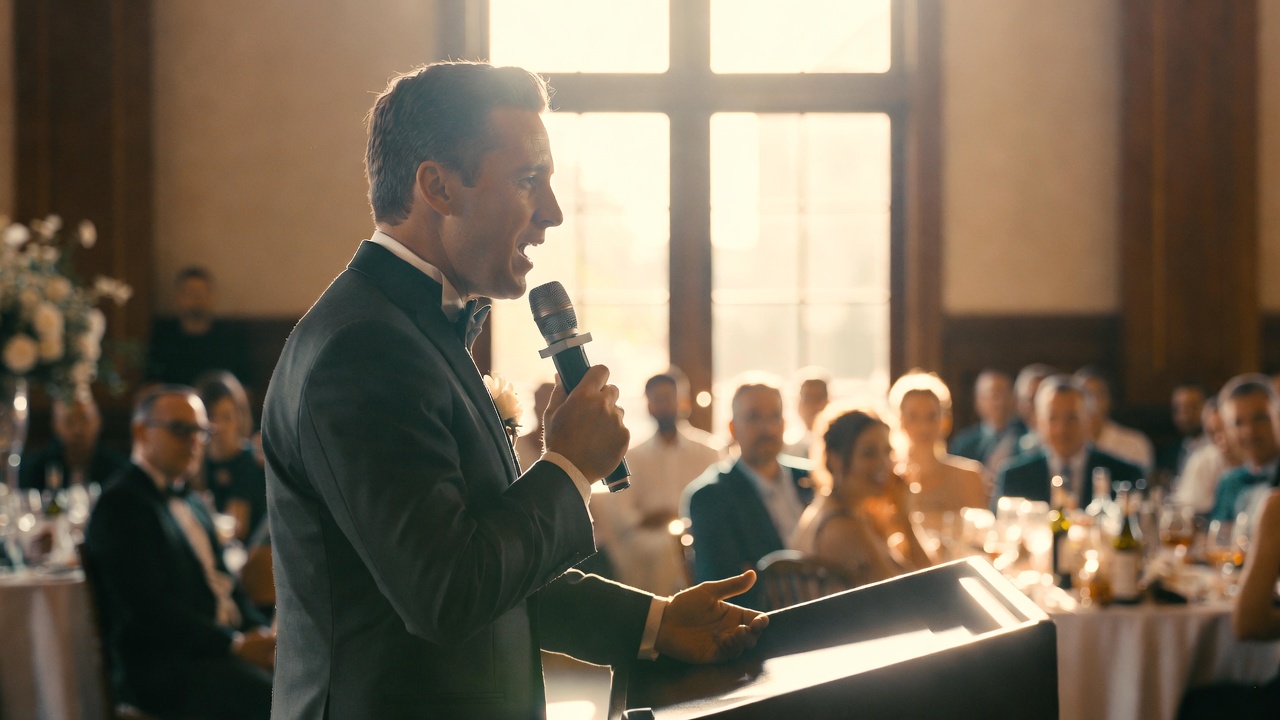
How to memorize your best man speech is not about reciting every word like a play. It is about knowing the shape well enough to look up, land the names, and still have a backup if your mind blanks for three seconds.
This guide covers whether you need full memorization, how to learn by beats instead of sentences, rehearsal systems that stick, memory anchors for stories and transitions, notes and teleprompter-style backup, and a simple day-of checklist. If the draft is still unfinished, start with this guide to writing your speech, then come back here so the words are portable — not fragile.
Do You Need to Memorize the Whole Speech?
No. Full word-for-word memorization is optional. What is not optional is connection: looking at the couple, pacing the jokes, and finishing the toast without hiding in a paragraph for four minutes.
Most best men do best with a hybrid. Memorize the open cold. Know the story beat well enough to tell it like a friend, not a teleprompter feed. Lock the toast and the names. Keep notes for the middle so one blank moment does not turn into a restart.
Reading every word flat is weaker than a natural delivery with a card. Freezing mid-speech often comes from treating memory as all-or-nothing — either perfect recall or panic. Aim for portable structure instead. A tighter draft is also easier to hold. If your speech runs long, study short and meaningful toasts and cut until every line earns its place before you try to memorize it.
Guests do not grade you on perfect recall. They notice whether you mean it and whether you can look up. Memorize enough to sound human. Keep backup so you stay human when nerves spike.
Chunking: Memorize by Beat, Not by Sentence
Sentences are the wrong unit. Speeches stick when you learn them as a short sequence of beats — open, story, partner, toast — each with a one-line label you can recover from if you blank.
Chunk like this. Write four to six cue labels on a card, not the full essay. Practice each chunk alone until you can start it from the label. Then chain chunk one into two, two into three, and so on. Never drill the whole speech from the top every time; that overtrains the open and starves the ending.
A simple beat map for almost any toast:
- Who I am — name, relationship, one light line.
- Who he is — one trait, one proof story.
- Who they are — the partner, how they fit.
- The wish — toast both people, raise the glass.
If you started from a fill-in outline, your chunks may already exist. template structures for your toast map cleanly onto beat labels — keep the structure, swap the memories, then memorize the labels before the full wording.
When a chunk always breaks, the writing is usually the problem. Simplify the sentence until you can say it standing without checking the card twice.
Rehearsal Systems That Stick
Silent reading on the couch is not rehearsal. Memory for a wedding toast is motor and oral — you need the words in your mouth while you stand.
Use a simple system across the week, not one panicked night:
- Out loud, standing. Same posture you will use with a mic.
- Spaced reps. Short runs on several days beat one marathon cram.
- From cues only. After day two, hide the full draft; speak from labels.
- One trusted listener. Ask only: Did you hear the names? Did the end land?
- One phone recording. You will hear speed and mumble the mirror will not show.
Practice the open and toast more than the middle. Those bookends carry the room and recover you if the center wobbles. For strong first and last lines worth locking early, pair this work with best man speech openings.
A sample cue card that is easier to memorize than a paragraph:
"Open: who I am · Story: the parking-lot night · Partner: how she matches that · Toast: hard days short, ordinary days enough · Cheers."
If a full run always collapses at the same place, stop and fix that chunk in isolation. Chain only after the weak beat is solid. Sleep after practice — memory consolidates better than another midnight rewrite.
Memory Anchors (Stories, Names, Transitions)
Anchors are the sticky points your brain can grab under stress: a vivid image, a name pair, a transition phrase you always use the same way.
Stories. Pick one scene you can see — a place, a time of day, a small object. Abstract praise evaporates; a parking lot, a borrowed jacket, a bad haircut defense does not. If the story is visual, the words follow.
Names. Slow practice on both names until they are automatic. Misnaming is the blank people remember. Say the couple’s names in the open and in the toast every single run.
Transitions. Memorize the bridges, not only the peaks. Lines like “which is why I trusted him with this” or “that same loyalty shows up with [Partner]” are the rails that keep you on track. Write them once, keep them stable, and treat them as part of the chunk labels.
"That night in the parking lot is the version of him I trust — and it is the same steadiness I see when he talks about [Partner]."
That single sentence is an anchor: story image, trait, partner bridge. When you blank, return to the image, not the exact adjectives. For how those lines sound in the room — pace, pause, eye contact — use how to deliver a best man speech once the words are load-bearing.
Notes, Phones, and Teleprompter-Style Backup
Backup is not cheating. Backup is what lets you look up more, because you are not terrified of a blank. The goal is a safety net you barely need — not a script you hide behind for the whole toast.
Notecards. Large type, few lines, one chunk per card or a single card with four labels. Number them. Do not print a novel in nine-point font.
Phone notes. Lock the screen brightness, turn on Do Not Disturb, and open the note before you are introduced. A lock screen notification mid-toast is worse than a card. Hold the phone like a card — glance, look up — not like a novel at arm’s length.
Teleprompter-style tools. Scrolling text at a calm pace is excellent for practice and a clean day-of option if you want eyes up more of the time. Rehearse with it the same way you will use it so the speed is familiar.
Whatever you bring, rehearse with that exact backup. Muscle memory includes the glance. If you only practice from a full document and then switch to four cue words on the day, you invent a new speech under pressure.
The Day-Of Memory Checklist
Day-of is for refresh and logistics, not for learning the speech. Cramming new wording the morning of the wedding is how solid drafts get soft.
- Night before. Two clean runs max from cues. Sleep. No midnight rewrite unless you find a factual error.
- Morning. Read the open and toast once. Check that names are correct on the card.
- Hour before. Confirm mic plan, visit the bathroom, eat something light if you can, limit alcohol until after you speak.
- Ten minutes before. One breath cycle, shoulders down, look at the couple when you stand. Do not loop the whole speech six times in a panic.
- If you blank. Stop, breathe, check the next cue, continue. A short “give me one second” is better than a thirty-second “um.” Do not restart from the top unless you truly lost only the open.
Memory and delivery are teammates. Knowing the beats is useless if you race through them; slow pace and pauses make memorized lines land. When you are ready to work nerves, mic, and room presence on top of this plan, return to how to deliver a best man speech.
For more inspiration on this topic, explore our guide to this guide on 1 minute best man speech: quick tips & examples — with examples, structure tips, and wording you can adapt for your ceremony.
You may also find helpful wording in this guide on best man speech for a coworker: examples that land.
Frequently Asked Questions
Do I need to memorize my entire best man speech?
No. Memorize the opening, the main story beat, and the toast well enough to look up often. Keep notes for the middle. Full word-for-word recall is optional; connecting with the couple and the room is not.
How long does it take to memorize a best man speech?
Most people need several short out-loud sessions across a week, not one all-night cram. A two-to-three-minute speech learned by chunks often locks in after a few standing runs plus one practice for a trusted listener. Tighter drafts memorize faster than long ones.
Is it okay to use notes or a phone during a best man speech?
Yes. Large-type cards or a locked, distraction-free phone note are normal and professional when you glance and look up. What fails is reading every word without eye contact. Rehearse with the same backup you will use on the day.
What should I do if I forget my best man speech mid-way?
Stop talking, breathe, check your next cue, and continue. A short recovery line asking for one second is better than rambling. Do not restart from the beginning unless you only lost the opening and the room is still with you.
Should I memorize my best man speech word for word?
Only if that style feels natural to you. Most speakers sound better with a memorized structure and flexible wording in the middle. Lock names, transitions, and the toast; let the story breathe so it still sounds like you.