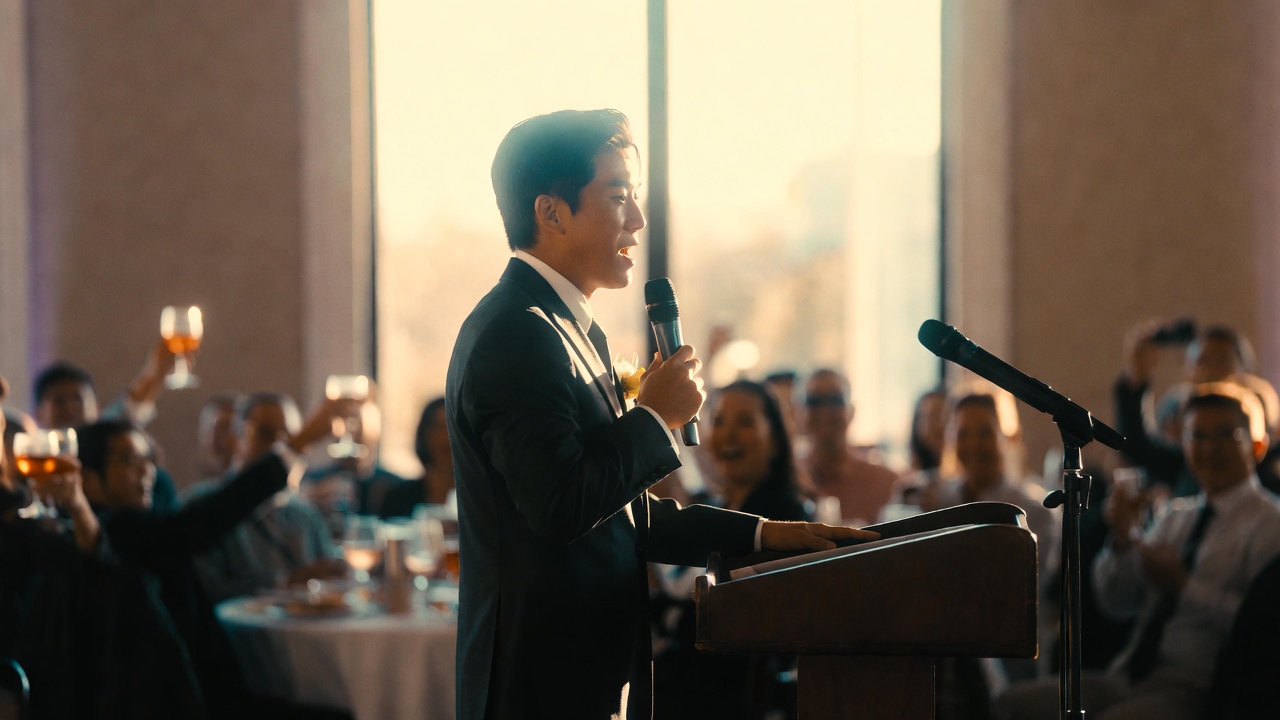
Best man speech format is not a script you recite. It is the four beats that keep a mixed room with you: who you are, one true story, his partner, and a toast both families can raise. Without that shape, even good stories sprawl, and guests remember the length more than the love.
Steal the skeleton. Keep your scenes. If the page is still blank, start with how to write a best man speech, then come back here and drop your draft into the format. Time it out loud once. Cut the third story before you add a fourth joke.
Why Format Beats a Highlight Reel
A wedding room is not a podcast. You have two to four minutes, a mixed table of grandparents and friends, and one job: make the couple feel seen. Format is how you do that without recapping a decade. A highlight reel of nicknames and cities sounds busy. A format sounds like a toast.
The room already knows you have history. They do not need the chronology. They need one picture that proves who he is, then a clear turn toward the person he married. When you skip the shape, you ramble, then you rush the names. Guests forgive nerves. They do not forgive a speech that never arrives.
The Four-Beat Best Man Speech Format
Use four beats and stop. Open: one sentence for who you are and how you know him. Story: one scene that shows a trait, not a résumé. Partner: the same trait, now with them in the frame. Toast: both names, a short wish, raise the glass.
That is the whole best man speech format. You can be funny inside it. You can be quiet inside it. You cannot skip the partner beat because you "don't know what to say" — say what you saw. If you want the beats on a page before you write sentences, fill-in-the-blank speech outlines hold the same four boxes without turning the night into a biography of you.
Lock the open and the toast in exact words. Let the middle breathe. Names belong in beat one and beat four, not as a surprise at the end. If a fifth beat keeps appearing — a second story, a roast, a list of thank-yous — it is not a new section. It is fat. Cut it or fold one line into the story you already have.
See the Format in One Short Speech
Hear the four beats in order. Steal the shape. Swap the parking lot for your scene. Keep both names in the last sentence. If you want more full drafts after this, keep real speech samples for inspiration nearby and study where they turn toward the partner — that turn is the format doing its job.
"Good evening. I am Alex, and I have the honor of standing as best man for Jordan. I will not recap every year. You already know we have history. The useful version is one night in a grocery parking lot in 2019: his car would not start, it was raining, and he still made sure I got home before he called a tow. That is who he is when nobody is clapping. Then I watched him meet Avery. Same patience. Same habit of making the room feel safer than it did five minutes earlier. Jordan, stay that person. Avery, thank you for loving the version of him the rest of us only see in glimpses. To Jordan and Avery — may your hard days stay short and your Tuesdays stay kind. Raise your glasses. Cheers."
That is open, story, partner, toast. Nothing else earned a seat. If he is quieter than this sample, shorten the praise and keep the picture. If you are louder, one light self-own can live in the story beat — not as a fifth section after the raise.
How Long Each Beat Should Run
For a two-to-three-minute toast, aim roughly: twenty seconds to open, sixty to ninety for the story, twenty to thirty for the partner, fifteen for the toast. Those are ceilings, not quotas. The story can be shorter. The toast should not get longer because you got emotional and added a second wish.
Time the draft out loud, standing. Silent reading lies. If the program is tight, study short best man speeches and cut a childhood detail before you cut the partner's name. Four to six minutes is the upper edge for most rooms. Past that, you are asking for patience you have not earned.
Same Format, Three Tones
Funny, short, and heartfelt speeches fail for the same reason: they abandon the beats. Humor belongs in the story, then you recover. Short means fewer sentences, not missing names. Heartfelt means one true picture, not ten adjectives. If jokes are your natural voice, keep humorous speeches with heart next to this format and make sure every laugh still ends on the couple.
"I am Sam, Chris's best man, and I promised I would not do a roast. I will do something more dangerous: the truth. He is the friend who shows up early, stays late, and still remembers your coffee order from 2019. I used to think that was just him being extra. Then I watched him with Maya — same loyalty, now aimed at a life. Chris, keep being the person who shows up. Maya, thank you for marrying him anyway. To Chris and Maya. Cheers."
That is still the four-beat format with the volume turned down. For a quieter room, drop the coffee line and keep the names. For a louder room, one owned habit is enough. Do not stack three jokes hoping the format will save you. The format only saves a speech that already knows where it is going.
A Fill-In Format You Can Steal Tonight
Brackets are prompts, not lines you read. If a blank stays generic after you fill it, cut that sentence. Say it standing once. If you stumble, the sentence is too long, not the format.
"Good evening. I am [Your name], [Groom]'s [brother / friend], and I have the honor of toasting him and [Partner] tonight. I will not list every year I have known him. The room already knows we have history. The version that matters is [one place, one year, one thing he did that shows his character]. I used to think that was just [friend stuff / brother stuff]. Then I watched him with [Partner]. The same [trait]. The same [habit]. I saw it in [one small picture of them together]. [Groom], you look like yourself. [Partner], thank you for loving that version of him in public. Please raise a glass: to [Groom], to [Partner], and to a marriage that already looks like the best of him. Cheers."
Fill the scene before you polish adjectives. If the toast still feels thin after this skeleton, the missing piece is usually a specific object or night, not a new paragraph of praise. For first and last lines that already fit this shape, steal a pair from strong first lines and toasts and keep your story in the middle where it belongs.
What to Cut When the Format Gets Fat
Cut the second story first. Then the inside joke that needs a glossary. Then any line that needs a wink, a warning, or an apology. Then the paragraph about how hard it was to write this. The couple did not ask for your process. They asked for a toast.
Keep both names. Keep one picture. Keep the raise. If you are still over time, shorten the story, not the partner beat. A best man speech format works when he feels seen as an adult, his partner feels welcomed, and you sit down while they still like you. That is the whole job. Stop adding.
Frequently Asked Questions
What is the best format for a best man speech?
Four beats: introduce yourself, tell one true story that shows his character, bring his partner into that same trait, then toast both names. That format works funny, short, or heartfelt. Extra stories and thank-you lists are usually fat, not structure.
How long should each part of a best man speech be?
For a two-to-three-minute toast, open in about twenty seconds, give the story sixty to ninety seconds, spend twenty to thirty on the partner, and close the toast in about fifteen. Time it standing. If you run long, cut a second story before you cut names.
Do I have to follow a strict best man speech format?
You do not need a rigid script, but you do need the shape. Rooms get lost when there is no open, no single story, and no toast. Lock the first sentence and the last sentence. Let the middle sound like you. Skip the format and guests remember the ramble.
Should jokes come before the story in a best man speech?
Put humor inside the story beat, then recover before the partner turn. Opening with a stacked roast trains the room to wait for the next punchline. One owned habit, then sincerity, keeps the four-beat format intact and still gets the laugh.