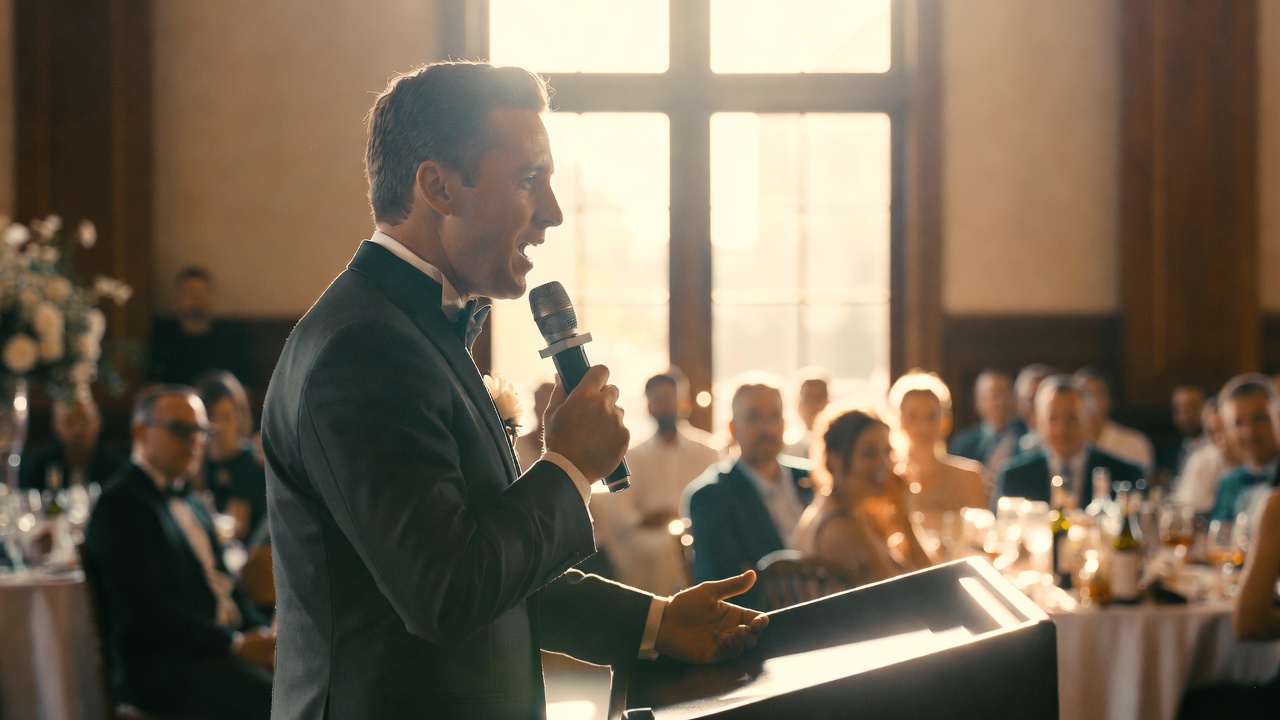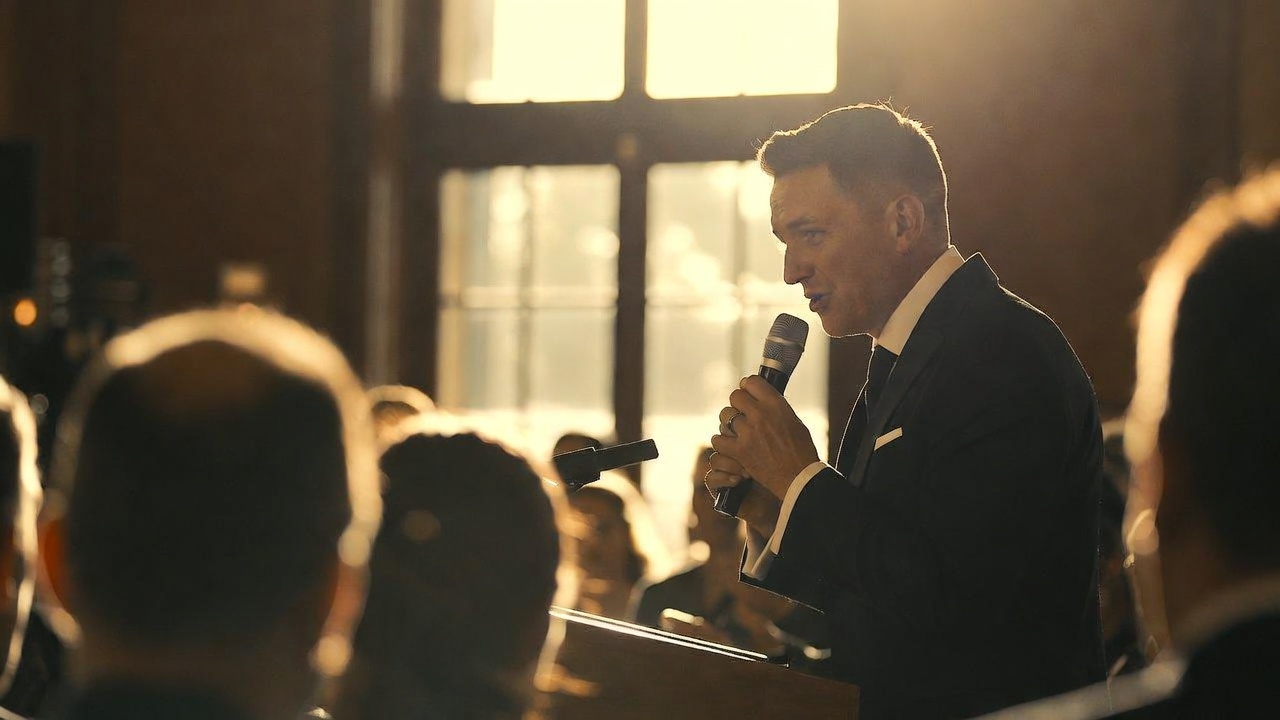
Best man speech templates exist for one job: get you off a blank page without turning your toast into a greeting card. A good template is a skeleton — open, story, bridge, toast — with blanks only you can fill. Steal the shape. Keep your stories.
If you still need the full writing process first, start with how to write a best man speech. Prefer finished models to study? Browse real speech samples for inspiration, then come back here and build your draft on a fill-in structure.
What Are Best Man Speech Templates?
Best man speech templates are fill-in-the-blank outlines of a working toast. They are not scripts to read word for word. They show you where the hook goes, where one real story belongs, where the partner enters, and how the toast ends clean.
Think of them as training wheels for structure. You still supply names, places, one true memory, and a wish you can say under pressure. Guests do not remember perfect prose. They remember whether it sounded like you — and whether anyone left the room squirming.
Templates help most when you know the groom but freeze when the document is empty. They also help when you have too much material and need a shape that forces cuts. What they cannot do is invent a friendship you do not have. If a blank says [Insert shared memory] and nothing true comes to mind, choose a different memory — not a prettier lie.
Why a Template Beats a Blank Page
A blank page invites two failure modes: staring for an hour, or writing a ten-minute résumé of every trip you ever took. A template removes both. You open with a line that is not only your name. You pick one story. You bridge to the partner. You toast. Done.
Structure is not the enemy of sincerity. Structure is what keeps sincerity from wandering. Most receptions want a classic three-to-four-minute toast. Templates keep you inside that lane so you do not discover at the mic that you are still on the college years.
Use a template when:
- You are not a natural writer and need a skeleton
- You have notes but no order
- You want a short path or a funny path without inventing a new format
- You rewrite better than you invent from zero
Skip pure template mode only if you already have a finished draft that works when you read it aloud. Even then, map your draft onto open → story → bridge → toast and cut anything that does not serve those beats.
How to Personalize a Template Without Sounding Generic
Generic templates fail when the blanks stay soft: "He is a great guy" and "She makes him happy." Specific wins. Name the city. Name the Tuesday. Name the habit only his friends know. One concrete scene beats five adjectives.
Personalization checklist:
- Replace every placeholder — names, nicknames, places, years. Leave nothing in brackets.
- Swap the story for yours — if the template story is a cancelled flight and yours is a road trip, use the road trip. Keep the function of the story (shows character), not the plot.
- Write the partner in — one true sentence about them together so half the couple is not decoration.
- Say the toast out loud — if you cannot remember it standing up, shorten it.
- Cut anything cruel — templates do not make mean jokes safe. If it only works in the group chat, delete it.
After you fill the blanks, close this page and rewrite the speech once from memory. That pass is what kills copy-paste cadence. Need stronger first lines or a cleaner closer? Pair your draft with strong first lines and toasts for bookends — then rewrite those too so they sound like you.
Fill-in-the-Blank Best Man Speech Templates
Start here for a classic romantic or warm-neutral toast. Copy a template, replace every bracket, then read aloud once with a timer. Two Mad-Libs skeletons sit first so you can fill fast; one complete ready-to-adapt speech follows so you can hear the finished rhythm.
Template A — Classic skeleton (Mad-Libs)
"[Opening observation about the day or the groom — not your name]. For those who do not know me, I am [your name], [relationship: best man / brother / oldest friend]. I have known [groom] since [when / where], and the version of him I want you to know is this: [one specific story with a place, a turn, and what it shows about his character]. [Partner's name], you did not just marry my friend. You married the person who [one true trait you have watched]. To [groom] and [partner] — may you [short wish in plain language]. Cheers."
Template B — Story-first skeleton (Mad-Libs)
"I was going to start with a joke about [light, kind setup], but the real story is simpler. [Insert shared memory: when / where / what happened]. That night — or that season — I saw [groom] [what he did that showed who he is]. [Partner], the best part is watching him become [softer / braver / more himself] with you. Raise a glass with me: to a marriage built on [two plain words: kindness, patience, laughter…]. Cheers."
Template C — Complete classic (adapt names and details)
"I have known him long enough to know the difference between the version of him that performs for a room and the one who shows up when nobody is watching. The Tuesday night version is the one worth toasting — the friend who texts back, who finds the hotel for everyone else first, who makes hard days feel solvable. Today I get to raise a glass to the person who makes that quieter version feel easy. To the two of you — may your home be loud with joy and soft with patience. Cheers."
After you fill Template A or B, compare your draft against a few finished samples in real speech samples for inspiration. Steal pacing, not biography. If the classic path still feels long, jump to the short templates below and cut harder.
Funny Template Paths
Funny templates only work if the laugh leaves the couple looking good — or at least forgiven. Use humor as the on-ramp. End on heart. For a full humor playbook after you pick a path, read humorous speeches with heart.
Funny path rules inside any template:
- One roast max, and never the partner as the punchline
- No exes, no content-warning bachelor stories, no jokes that need a three-minute apology
- If the room includes grandparents and the joke only works in a bar, cut it
- Always land a sincere bridge before the toast
Template D — Complete funny-then-true (adapt freely)
"I was going to roast him about his cooking, his fashion sense, and his ability to lose his keys inside his own apartment. Then I remembered his partner has to live with him, and I would like to be invited back. So here is the truth under the jokes: he is loyal, he is ridiculous, and he is the friend you call when the day goes sideways. To the two of you — may your fridge stay stocked and your arguments stay short. Cheers."
To personalize: swap the three light roasts for three true, kind flaws only friends know. Keep the pivot sentence ("here is the truth under the jokes"). Keep a toast the whole room can join. If your humor is mostly mean, you do not need a funnier template — you need a warmer one.
Short Template Paths
Short templates are not lazy. They are disciplined. Use them when the program is tight, when you freeze under pressure, or when one paragraph is the whole true story. For more on cutting ruthlessly, see short best man speeches.
Short path skeleton: hook → one trait or one micro-story → partner beat → toast. Target about 60–90 seconds spoken. Do not pad with fake jokes to "earn" the mic.
Template E — Complete short toast (adapt names)
"I will keep this short because the best things about him are simple. He shows up. He tells the truth. He found someone who makes him softer without making him smaller. To both of you — cheers."
Personalize by replacing the three traits with three of yours — still short, still true. If you need more than ninety seconds, add one concrete sentence of story between the traits and the toast, not a second act about college.
Final pass for any template on this page: read standing up, once, with a glass in your hand. If you trip on a sentence, simplify the sentence. If you cannot say the last line without looking down, shorten the last line. Structure got you started. Your voice finishes the job.
Couples often continue with this guide on emotional best man speeches: heartfelt words that land after drafting their core promises.
You may also find helpful wording in this guide on best man speech last minute: quick winning ideas.
Couples often continue with more about best man speech without swearing that still lands after drafting their core promises.
If you want a related angle next, read Best Man Speech from Father to Son: Words That Land for additional examples and ceremony-ready language.
Frequently Asked Questions
Can I read a best man speech template word for word?
No. Templates are skeletons. Replace every placeholder with your names, your story, and your toast. Guests can hear a copied script — rewrite until it could only belong to this wedding.
How long should a templated best man speech be?
Most land around three to four minutes spoken. Short templates can work in about a minute. Time yourself reading aloud once before you call the draft done.
Should I use a template or a full speech example?
Use examples to hear finished rhythm and tone. Use templates when you need blanks to fill. Many best men do both — pick a tone from an example, then build the draft on a template skeleton.
What if the funny template still feels mean?
Switch to the classic or short path. Humor is optional. Kind and specific always beats a roast that makes half the table flinch.
How do I fill in [Insert shared memory] if nothing funny comes to mind?
Funny is not required. Use a kind, specific scene: a hard day he handled well, a small habit only friends know, or the moment you realized his partner fits. Truth beats punchlines.