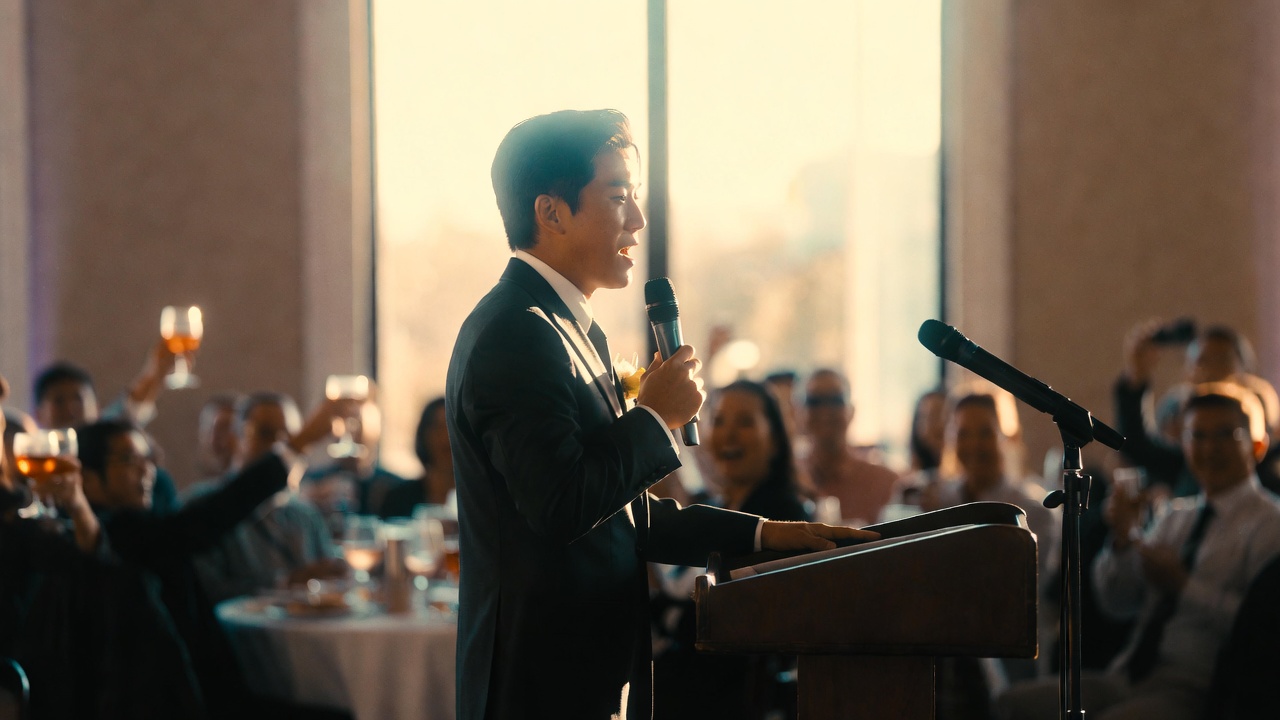
Best man speech do's and don'ts are not etiquette trivia. They are how you keep a mixed room on your side while you still sound like his friend. The couple asked you to toast a marriage. Guests will remember whether you protected them, not whether you proved you were funny.
This guide is the cut list: what to do, what to leave out, and lines you can adapt. For a full outline first, use how to write a best man speech. For complete drafts in other voices, keep real speech samples for inspiration nearby after you lock this room's rules.
Why These Do's and Don'ts Matter
A wedding room is not a group chat. Grandparents, coworkers, and kids at the back table hear every word. A line that works at 1 a.m. can shrink the couple at 7 p.m. The job is recognition, not ranking.
Do's and don'ts exist so you do not spend the toast recovering from a joke. If a sentence needs a wink, a warning, or an apology after it, it is already a don't. Write the picture instead. Specificity will feel more like him than a dare will.
The Do's That Always Work
Do introduce yourself in one clean sentence, then move. Do name both people early. Do pick one true story that shows his character, not yours. Do bring his partner into the last line of that story even if they were not in the original night. Do close with both names and a short wish the whole room can raise a glass to.
Do write the toast first so the middle has somewhere to go. Do time the draft out loud. Four to six minutes is enough. If you want a skeleton after you lock these rules, fill-in-the-blank speech outlines will hold the same beats without turning the night into a highlight reel of you.
The Don'ts That Kill a Toast
Don't open with a disclaimer. Don't stack three jokes hoping one lands. Don't use an ex, a bedroom, a money fight, or a family wound. Don't make either partner the punchline. Don't spend a minute explaining how hard it was to be his friend so the room will applaud you.
Don't tell an inside joke that needs a glossary. Don't give marital advice from the mic. Don't keep a childhood nickname running after the first mention. If a line only works because it embarrasses him, it is a scoreboard, not a wedding speech.
"I could tell you the version that needs a warning. The useful version is quieter. He is the friend who shows up early, stays late, and still remembers your coffee order from 2019. That is the person she married. That is the person I trust."
How to Test Humor Before It Hits the Mic
The Sunday-lunch test is enough: would both families laugh with you? If you hesitate, rewrite the picture. Do not soften the dare. Roast a habit he already owns, then recover in one sentence that names why that habit is actually loyalty.
Take one light beat, then turn sincere before anyone has to decide whether they are allowed to laugh. If humor is the whole job, keep humorous speeches with heart nearby, then come back and cut anything that needs a recovery longer than the joke.
Lines That Follow the Rules
Steal the shape, not the biography. Swap the names and the one true fact. Keep the recovery. If a line could belong to any best man in any room, cut it and put your detail back in.
"I have teased him enough. Here is what I mean. Jordan, stay the friend who shows up even when the map is wrong. Avery, thank you for loving the version of him the rest of us only see in glimpses. To Jordan and Avery — may your arguments stay short, your Tuesdays stay kind, and your home always have room for the people who knew him first. Raise your glasses. Cheers."
If they are quieter than this sample, shorten the wish and keep both names. Guests remember how you finished. End on the couple, then stop.
A Tight Drafting Pass
Read the draft out loud once for jokes, once for names, once for heat. Circle every line that needs a wink, a warning, or a recovery. Cut those first. Then time the rest. If the speech only works because you speed past a risky bit, the bit is the problem.
Lock the close while you are still clear-headed so nerves do not invent a last-second dare at the mic. If the program is tight, check short best man speeches and time the risky lines out of existence. For first and last lines that already follow these rules, keep strong first lines and toasts next to this draft and steal the bookends, not the middle.
A Full Example That Does Both
This is the longer pass — hear how the do's sound together. Keep the brackets as prompts, not as lines you read. If a blank stays generic after you fill it, cut that sentence. Then sit down.
"Good evening. I am [Name], and I have the honor of standing as best man for [Groom]. I will not recap every year I have known him. The room already knows we have history. Growing up — and then as adults — he was the one who [one true scene that shows his character, not yours]. I used to think that was just friend stuff. Then I watched him meet [Partner]. The same patience. The same loyalty. The same habit of making people feel safer than they did five minutes earlier. I saw it in the way he talks about them — first, and without a speech attached. [Groom], you did not need me to prove I know you. You needed me to say this out loud: you look like yourself. [Partner], thank you for loving that version of him in public. Please raise a glass: to [Groom], to [Partner], and to a marriage that already looks like the best of him. Cheers."
If he is quieter than this sample, shorten the praise and keep the stories. If humor is your natural voice, let one line tease a habit he still owns and let the last three stay sincere. Do not add a fourth story after the toast because the emotion is still running. A best man speech that follows these do's and don'ts lands when he feels seen as an adult, his partner feels welcomed, and nobody has to pick a side. That is the whole job.
Frequently Asked Questions
What are the most important best man speech do's and don'ts?
Do introduce yourself, tell one true story, name both people, and close with a short wish. Don't use exes, bedrooms, money fights, family wounds, or a joke that only works if either partner shrinks. If a line needs a disclaimer, it is already a don't. Specificity will protect the couple better than a dare will.
What should you never say in a best man speech?
Never mention an ex, anything sexual, a private fight, or a family tension the room did not ask to hear. Never make the partner the punchline. Never spend a minute explaining how hard it was to be his friend so guests will applaud you. The toast is a wedding speech, not a roast set.
Can a best man speech be funny if you follow the don'ts?
Yes. Tease a habit he already owns, then recover with a sentence that proves why that habit is actually love. Take one laugh, then turn sincere before the toast. Clean humor in a mixed room will play as loyalty, not as you going soft.
How long should a best man speech be if you follow these rules?
Four to six minutes is the sweet spot. That is enough time for two stories and a toast. If you are over seven minutes in rehearsal, cut a joke or a childhood detail before you cut the close. Guests came for this marriage, not a highlight reel.
Should I ask the couple to approve my best man speech?
You do not need them to edit every sentence. You do need a sanity check on anything that names a private story, a family detail, or a joke you are unsure about. If you would not say it at Sunday lunch with both families, do not wait for their permission. Cut it.
How do I start a best man speech without breaking the rules?
Say your name, your role, and the couple in one clean sentence. Skip the recap of how long you have known him and skip any disclaimer about being nervous or unfunny. The room already expects you to speak. They need a reason to listen to you about the person he is marrying.