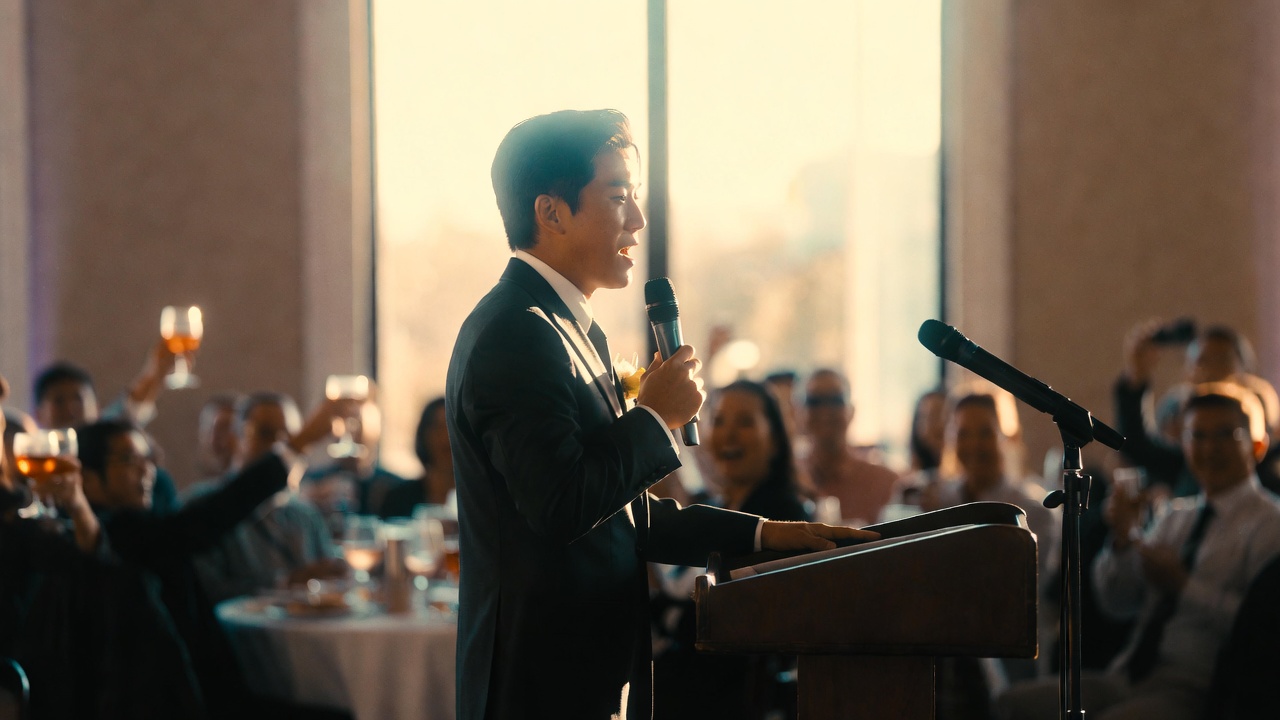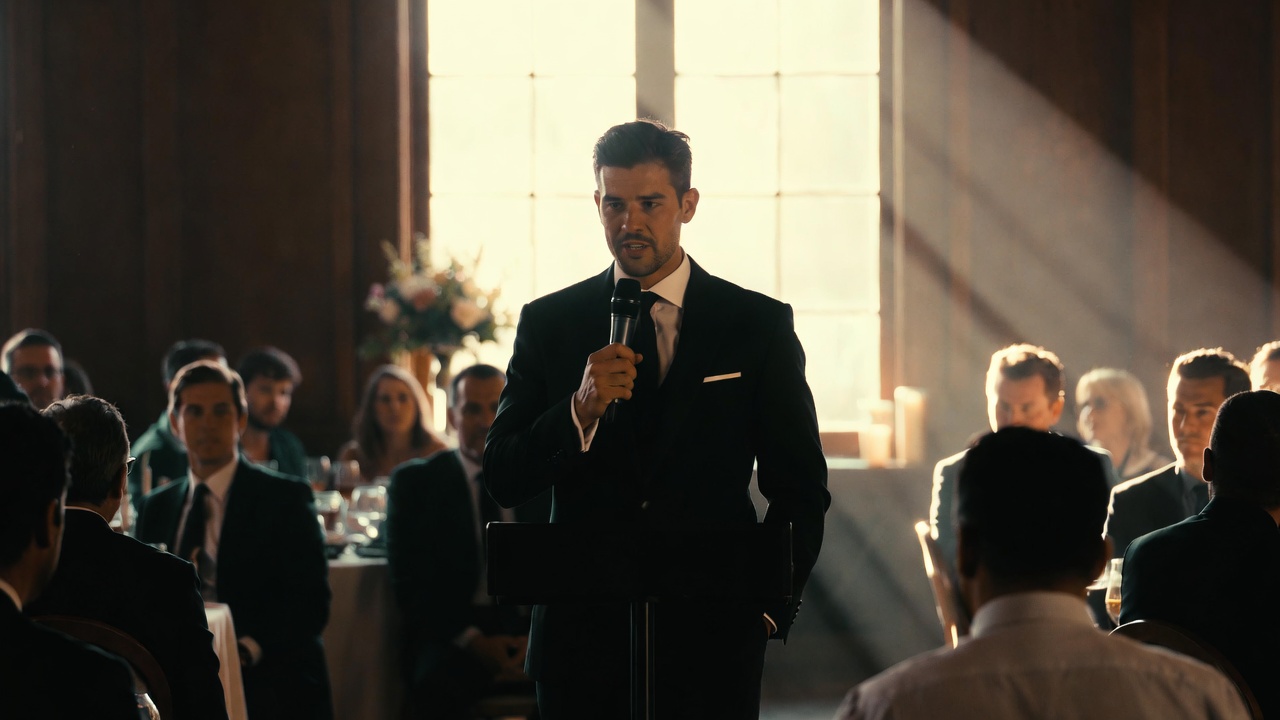
How to deliver a best man speech is the half of the job nobody practices until the room is already watching. Good words fall flat if you rush, stare at the card, or disappear into the mic.
This guide covers nerves before you stand up, pace and pauses, mic and eye contact, what to do if you blank, and a simple practice plan for the week before. If the draft is still unfinished, start with the speech writing walkthrough, then come back here to make it land out loud.
Delivery Matters as Much as the Words
Guests do not score your vocabulary. They feel whether you mean it. Delivery is pace, presence, and the courage to look up — not theatrical performance.
A clear two-minute toast spoken slowly will outrank a brilliant six-minute draft mumbled into a phone. The room is noisy, emotional, and full of people who already sat through a ceremony. Your job is to make one true thing easy to hear.
That starts before the mic. Know your open, your story beat, and your toast cold enough that notes are backup, not a script you hide behind. When you want models of how strong speeches sound on the page, skim example speeches you can adapt — then practice them the way you will say your own: standing, full voice, once without stopping.
Managing Nerves Before You Stand Up
Nerves are normal. They mean you care. What wrecks speeches is fighting the feeling instead of channeling it into energy and a slightly slower pace.
In the hour before: eat something light if you can, limit alcohol until after you speak, visit the bathroom, and check the mic plan with the DJ or venue. Read your open once under your breath — not the whole speech six times in a panic loop. That loop burns adrenaline without adding skill.
Right before you stand: plant your feet, drop your shoulders, and take one slow breath in and a longer breath out. Look at the couple first, then the room. You are talking to people who already like you. If memorization is the real stress point, pair this guide with how to memorize your best man speech so the words feel portable, not fragile.
One more rule: never open by apologizing for being nervous. The room did not need that data. Start with who you are and go.
Pace, Pauses, and Punchlines
Most first-time speakers talk too fast. Anxiety compresses time. Your fix is deliberate: aim for conversational speed that feels almost slow to you. It will sound normal to them.
Pause after the open so the room settles. Pause after a funny line so the laugh can happen — if you steamroll, you steal your own joke. Pause before the toast so the raise feels like a landing, not a scramble. Punchlines and heart lines both need air.
Names and the final line deserve extra care. Slow down on the couple's names. Hold a beat before "cheers." If a line is meant to land hard, practice it as a short standalone so you can say it clean even if the middle gets wobbly:
"To [Name] and [Partner] — may your hard days stay short and your ordinary days feel like enough. Cheers."
If your draft runs long, cut on the page before you try to speak faster. A tighter speech is easier to deliver. brief speech examples show how much still lands in under three minutes when every line earns its place.
Mic, Eye Contact, and Body Language
Hold the mic below your mouth, not in front of your teeth. Speak across the top of it. If it is on a stand, adjust the height before you start so you are not hunched or on tiptoes. Do a two-second level check if the venue allows — "Can everyone hear me?" is fine once, then move on.
Eye contact: couple first, then sweep the room in thirds — left, center, right — without spinning. You do not need to lock eyes with every uncle. You do need to look up often enough that it feels like a toast, not a reading. Notes are allowed. Hiding in them for the whole speech is not.
Body language stays simple. Feet planted, chest open, free hand relaxed or lightly on the card. Do not pace like a TED talk unless the room is tiny and you know the space. Do not clink your glass so hard the toast becomes a comedy bit. Smile when the line is warm; stay still when the line is sincere.
Strong first and last lines make mic work easier because the bookends are muscle memory. For proven openers and closes you can rehearse until they are automatic, see speech bookends that work.
What to Do If You Blank or the Room Goes Quiet
Blanking is survivable if you planned for it. Bring a card or phone with large type — open, story cue, toast. If you lose the thread, stop talking, look at the couple, find your next cue, and continue. The room will wait. Filling silence with "um" for thirty seconds is harder to watch than a clean three-second pause.
Keep a recovery line you can say without thinking:
"Give me one second — I want to get this part right."
That line buys dignity. Then go to your next beat. Do not restart the whole speech from the top unless you truly lost the open and the room is still with you.
Quiet rooms are not always failure. Sometimes people are listening. Hold the pause, finish the sentence, and move on. If a joke dies, do not explain it. Land the sincere turn and keep going — heart recovers faster than a second joke stack.
If technology fails (dead mic, feedback), step slightly closer to the couple and project to the front tables first. Speak to people, not to the ceiling. You can finish a short toast unamplified if you stay calm and cut optional middle lines.
Practice Plan for the Week Before
Practice is not reading silently on the couch. It is standing up and saying the words out loud until the shape is familiar.
- Seven to five days out. Full read-aloud once a day. Time it. Cut anything past your target length.
- Four to three days out. Practice from notes only — not the full paragraph draft. Mark pause points after jokes and before the toast.
- Two days out. One run for someone you trust. Ask only: Did you hear the names? Did the ending feel earned? Ignore style opinions that add lines.
- Day before. Two clean runs max. Sleep. Do not rewrite at midnight unless you find a factual error.
- Day of. Read the open and toast once. Check mic logistics. Breathe. Go.
Record one practice on your phone. You will hear speed problems the mirror will not show. If a section always breaks, simplify the wording — delivery problems are often writing problems in disguise.
Couples often continue with more about best man speech openings & closings that land after drafting their core promises.
For more inspiration on this topic, explore our guide to How to Introduce Yourself in a Best Man Speech — with examples, structure tips, and wording you can adapt for your ceremony.
For more inspiration on this topic, explore our guide to more about best man speech jokes that work in a mixed room — with examples, structure tips, and wording you can adapt for your ceremony.
If you want a related angle next, read Best Man Speech Cue Cards: Speak From Notes, Not a Script for additional examples and ceremony-ready language.
You may also find helpful wording in this guide on best man speech at rehearsal dinner: keep saturday sacred.
Frequently Asked Questions
How do I stop being nervous before a best man speech?
You will not erase nerves completely — and you do not need to. Slow your pace, breathe out longer than you breathe in, limit alcohol before you speak, and know your open and toast cold. Channel the energy into presence instead of fighting it.
Should I memorize my best man speech or read it?
Memorize the open, the story beat, and the toast well enough to look up often. Keep notes as backup. Reading every word flat is weaker than a natural delivery with a card. Full memorization is optional; connection is not.
How slow should I speak when delivering a best man speech?
Aim for a pace that feels slightly slow to you. Pause after jokes and before the toast. Slow down on names and the final line. Most rushed speeches are anxiety, not personality — practice out loud until slower feels normal.
What if I forget my best man speech mid-way?
Stop, breathe, check your notes, and continue from the next cue. A short recovery line like asking for one second is better than rambling. Do not restart from the beginning unless you truly lost only the opening and the room is still with you.
How many times should I practice my best man speech?
Plan several full out-loud runs across the week before, not one cram session the night before. Include at least one standing practice and one run for a trusted listener. On the day of, refresh only the open and toast so you stay fresh.