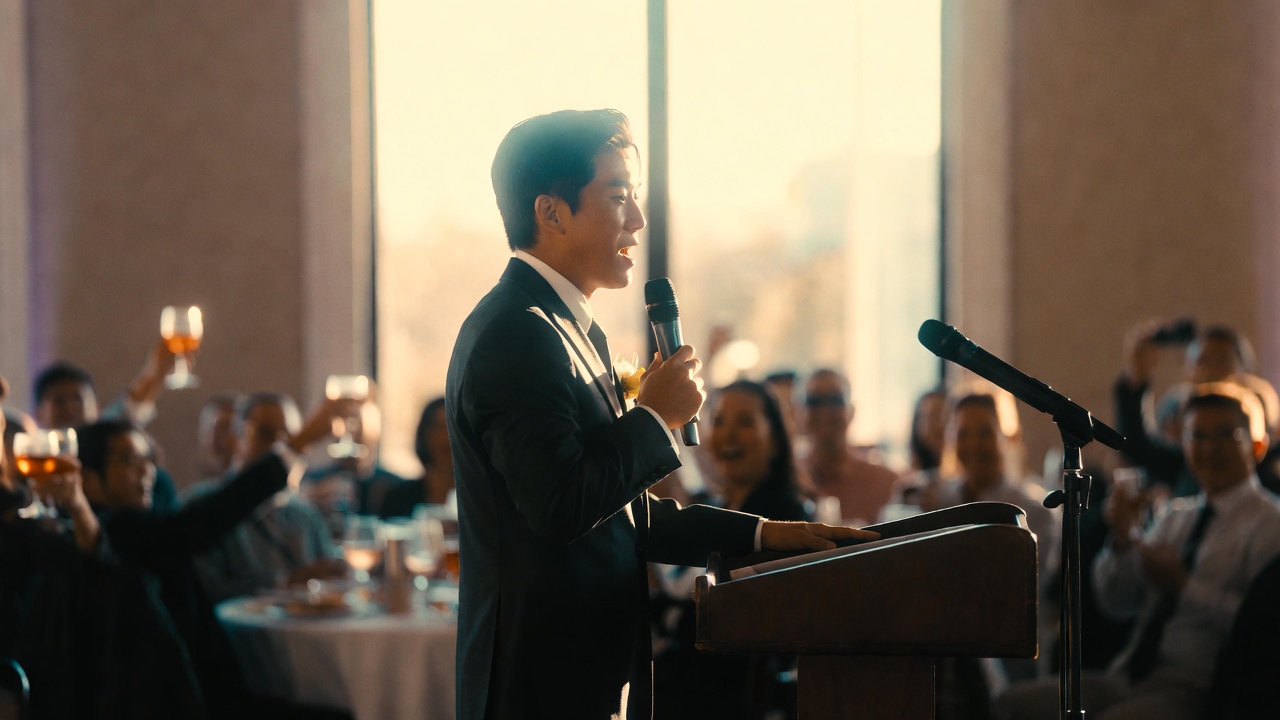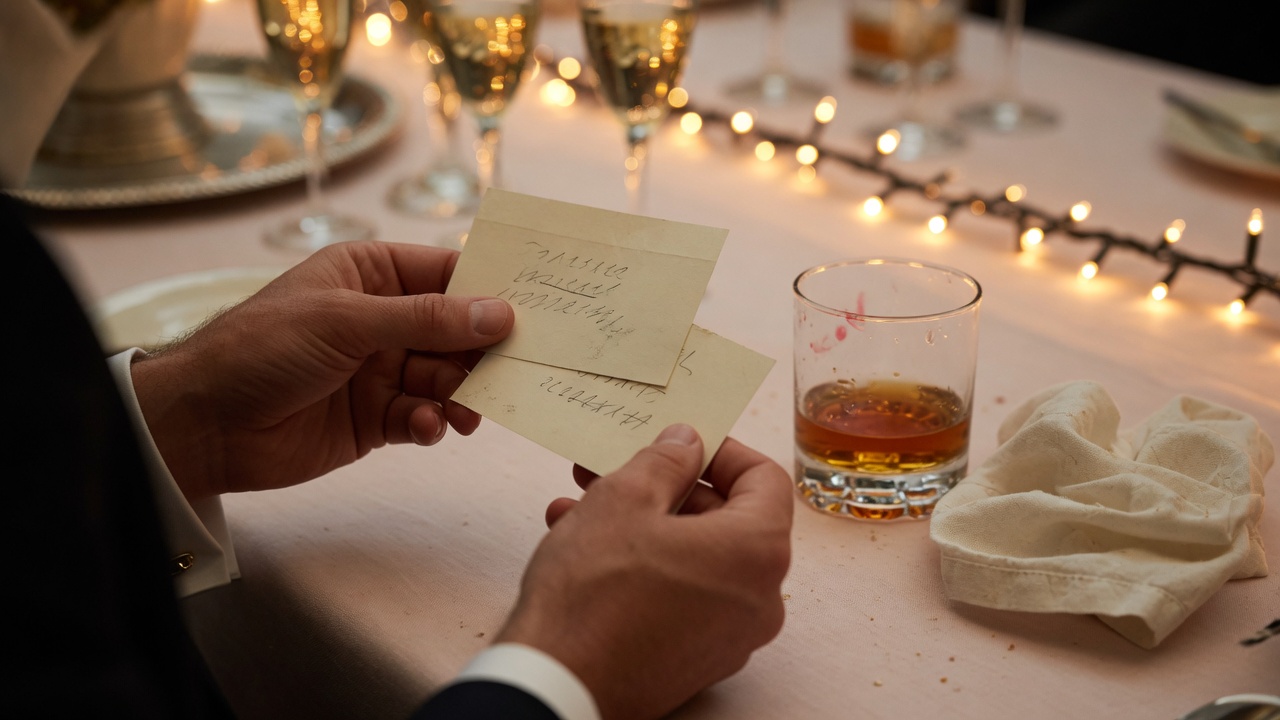
Best man speech cue cards are the difference between looking at the couple and disappearing into a paragraph. A full script feels safe until the mic is live. Then you hide. Cards keep the shape in your hand so the room still gets your face.
This guide is the practical version: what to write, how big the type should be, how many cards to carry, and how to practice with the same notes you will hold. If the speech itself is still a blank page, start with this guide to writing your speech, then come back here and cut the draft down to cues. Steal the labels. Keep your stories.
Why Cue Cards Beat a Printed Speech
A printed speech is a novel at arm's length. Guests notice the page before they notice the toast. Cue cards reverse that. You glance for the next beat, then look up. The room hears a person, not a document.
Cards also survive nerves better than memory-or-nothing. If you blank, the next label is already in your hand. You do not restart from the top. You do not invent a new speech. You find the next beat and continue.
If you still want a fill-in skeleton before you shrink it, template structures for your toast map cleanly onto four cards: open, story, partner, toast. Write the speech first. Then starve the page until only the cues remain.
What Belongs on Each Card
One card, one beat. Not one card, one essay. The front should hold a label you can read at a glance: Open. Story. Partner. Toast. Under that, three to six short lines — names, a place, a transition, the last sentence of that beat. Leave the adjectives in your mouth, not on the card.
Put both names on the toast card in letters large enough to see without leaning. Misnaming is the blank people remember. Put the recovery line on the back of card two if you tend to freeze in the middle. Number the cards in the corner so a shuffle is not a crisis.
"Card 1 — Open
Sam. Maya's brother. Chris's best man.
One line: the friend who shows up early.
Pause. Look at them. Then the parking-lot night."
That is a cue, not a script. If you can already tell the story at dinner, you do not need the punchline written out. You need the door into it.
Size, Type, and How Many Cards to Carry
Use 4×6 if your handwriting is large, 3×5 if you write tight. Print or write in a size you can read at chest height in dim light — usually 18 to 22 point, or the equivalent in marker. Nine-point Times New Roman on a folded program is how people panic.
Four cards is the sweet spot for a two-to-three-minute toast. Six is fine if your stories are short. Eight means you have not cut yet. Carry a spare set in your jacket so a dropped card is an inconvenience, not a plot twist.
Write Cues, Not a Novel
Cues are labels and pictures. "Parking lot, 2019, borrowed jacket" will bring the story back faster than a paragraph you try to recite. If a line always breaks in rehearsal, the writing is usually the problem — shorten the sentence until you can say it standing without checking twice.
Lock three things in exact words: the open, both names, and the toast. Let the middle breathe. That hybrid is how most rooms get a speech that sounds like you. For learning by beat instead of by sentence, pair this with memorization techniques for your toast so the cards are a map, not a crutch you hide behind.
A useful test: cover the card, say the beat, uncover, and check whether you missed a name or a transition. If you missed a joke, the joke may not belong. If you missed the partner's name, write it larger.
Index Cards Versus a Phone Note
Cards win for most receptions. They do not lock. They do not flash a notification. They look like a toast, not like you are checking scores. Hold them at chest height, glance, look up. Do not fan them like a dealer.
A phone can work if you lock brightness, turn on Do Not Disturb, and open the note before you are introduced. Hold it like a card — not like a novel. A lock-screen ping mid-toast is worse than a paper shuffle. Whatever you bring, that is the backup you rehearse with. Switching formats on the day invents a new speech under pressure.
Neither format replaces presence. Pace, pauses, and looking at the couple still do the heavy lifting. When you are ready to work the room on top of the notes, use how to deliver a best man speech so the cards stay backup, not a hiding place.
Practice With the Same Cards You Will Hold
Silent reading on the couch is not rehearsal. Stand up. Use the real cards. Muscle memory includes the glance. If you only practice from a laptop and then switch to four labels on Saturday, you will hunt for sentences that are not there.
Run the open and the toast more than the middle. Those bookends recover you if the center wobbles. Mark a pause after the first laugh and a pause before the raise. For first and last lines worth locking onto card one and card four, steal a pair from best man speech openings and keep your story on the cards in between.
One trusted listener is enough. Ask only: Did you hear the names? Did the ending land? Ignore style notes that add lines. If a card always stalls you, rewrite that card — do not add a fifth paragraph to paper over it.
Example Cue Cards You Can Steal
Steal the labels. Swap the scene. Keep it short enough to read in a dim room. If the program is tight, study short and meaningful toasts and cut a childhood detail before you add a fifth card.
"Card 1 — Open: I am [Name], [Groom]'s [brother / friend]. One true line. Pause.
Card 2 — Story: the [place] night. Trait it proves. Do not list a decade.
Card 3 — Partner: same trait with [Partner]. One picture, not a résumé.
Card 4 — Toast: both names. May your hard days stay short. Cheers."
If funny is your natural voice, put one light self-own on card two and keep card four sincere. If you are quieter than this sample, drop the extra praise and keep the names. Best man speech cue cards work when they point at a speech you already know how to tell — they fail when they try to be the speech.
When You Blank, Use the Next Cue
Blanking is survivable if the next label is large. Stop talking. Breathe. Look at the couple. Find the next card. Continue. Filling thirty seconds with "um" is harder to watch than a clean pause. Do not restart from card one unless you truly lost only the open.
"Give me one second — I want to get this part right."
That line buys dignity. Then go to the next beat. If a card falls, number two is still number two. If the room goes quiet, they are often listening. Finish the sentence you can see, raise the glass, and sit down while they still like you.
Frequently Asked Questions
Should I use cue cards for a best man speech?
Yes, if they help you look up. Cue cards are normal in a wedding room when you glance and keep talking to the couple. A full printed speech held at arm's length is what feels stiff. Memorize the open, the story beat, and the toast; keep the cards as a map.
What should I write on best man speech cue cards?
Write labels and pictures, not paragraphs. One card per beat: open, story, partner, toast. Include both names, a place or object that brings the story back, your transition line, and the exact last sentence of the toast. If you need a full paragraph, the card is too crowded.
How many cue cards do I need for a best man speech?
Four cards fit a two-to-three-minute toast. Six is fine if your beats are short. More than that usually means you have not cut yet. Number them, keep a spare set, and use type large enough to read at chest height in dim light.
Is it okay to read a best man speech from cards?
Glancing is fine. Reading every word without eye contact is not. The room came for a toast, not a recital. Practice with the same cards you will hold so the glance is muscle memory, then look at the couple for names and the final line.
Are index cards better than a phone for a best man speech?
For most receptions, yes. Cards do not lock, ping, or look like you are checking a screen. A phone can work if Do Not Disturb is on, the note is open before you are introduced, and you hold it like a card. Rehearse with whichever backup you will actually carry.
What should I do if I lose my place on the cue cards?
Stop, breathe, find the next numbered card, and continue. A short line asking for one second is better than rambling or restarting from the beginning. Number the cards so a shuffle is recoverable, and keep a spare set in your jacket.