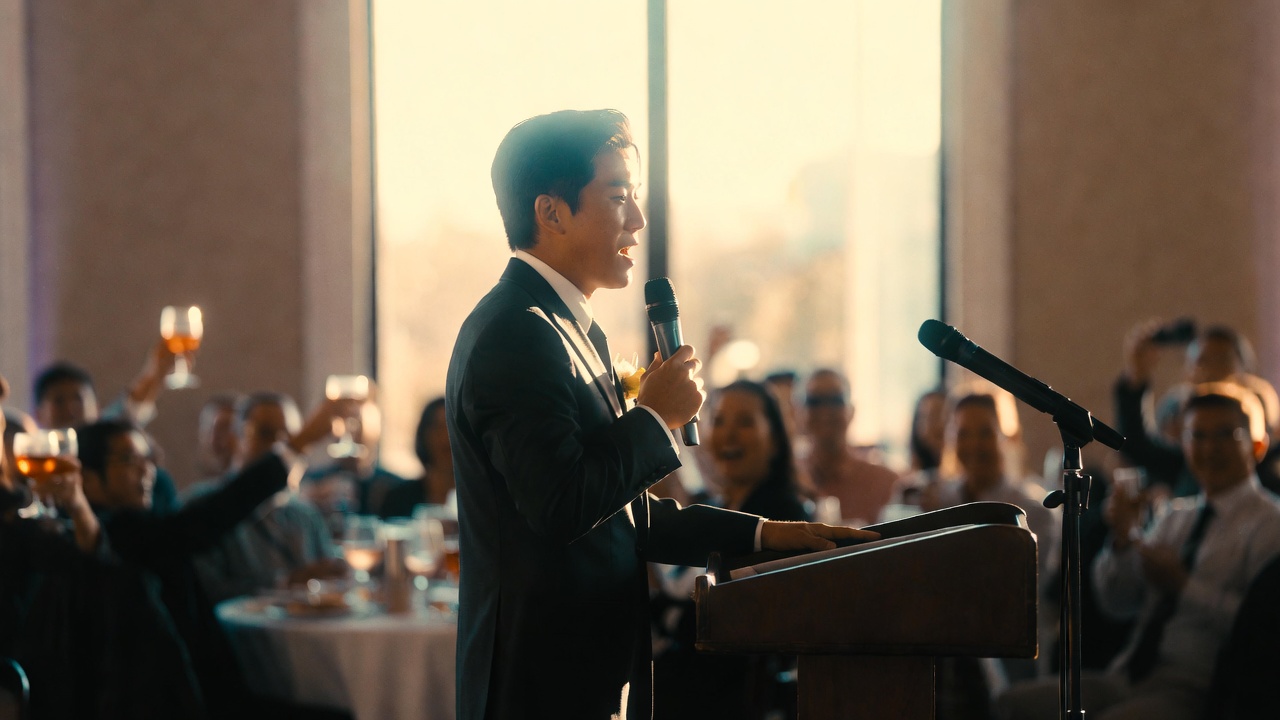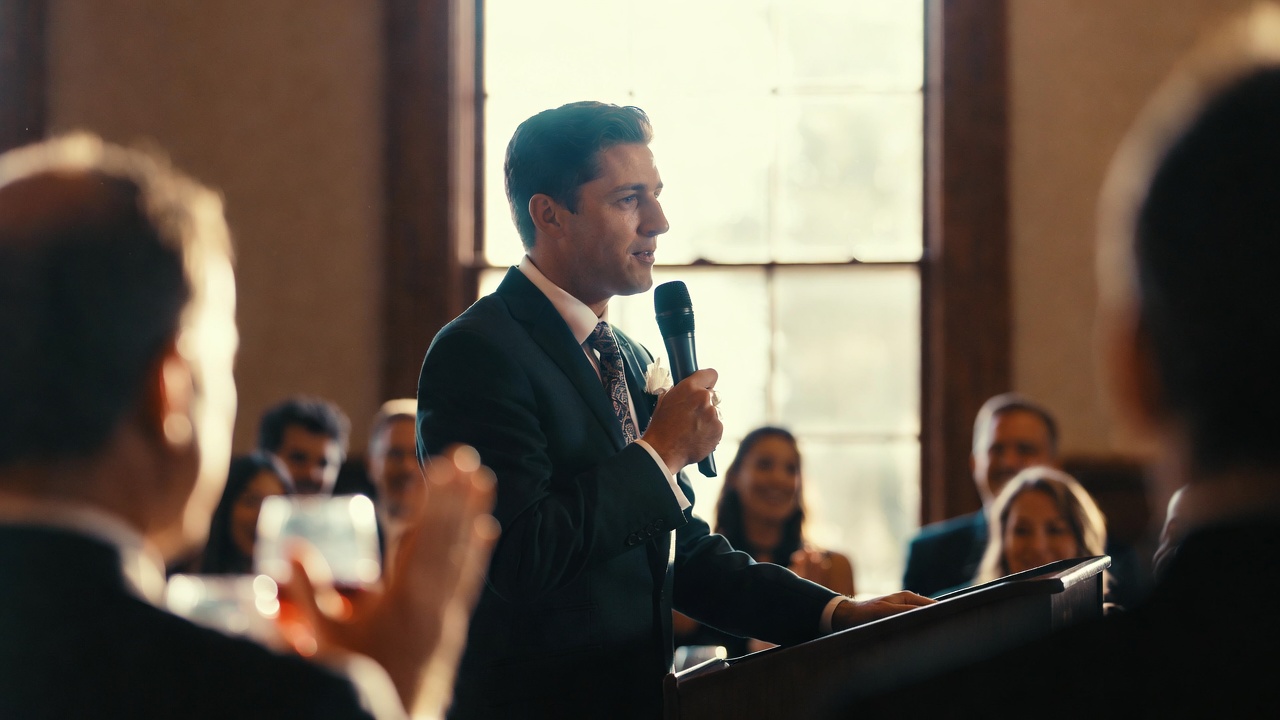
Best man speech openings and closings do more work than the middle. The first twenty seconds decide whether the room leans in or checks out. The last twenty seconds decide what people remember when they raise a glass.
This guide gives you first lines that work, openings to skip, a clean bridge into your story, toast formulas that feel earned, and full open-plus-close pairings you can adapt. Steal the bookends. Keep your stories. For the full draft process around those bookends, start with this guide to writing your speech.
Why Openings and Closings Carry the Speech
Most guests forgive a slightly messy middle. They do not forgive a confused start or a toast that trails off. Openings set the contract: who you are, why you are speaking, and whether this will be warm, funny, short, or all three. Closings cash that contract: you name the couple, make a wish, and release the room to clap and drink.
Think of the speech as a short arc with heavy weights on both ends. If the open is clear, the story has permission to breathe. If the close is clean, even a simple middle lands. If either end wobbles, the whole thing feels unfinished no matter how good the anecdote was.
You do not need a perfect monologue. You need a first sentence you can say without looking down, and a last sentence you can land without rushing. Everything between those bookends is easier once both are locked. When you want full speeches that show how opens and closes sit inside a complete arc, study our best man speech examples collection and watch the first and last thirty seconds more than the jokes.
Best Man Speech Opening Lines That Work
Strong openings do three jobs in under twenty seconds: identify you, orient the room, and earn one more minute of attention. They do not apologize, do not roast the couple, and do not start with a long setup about how hard writing this was.
Use a shape, not a famous quote. Who I am → one light true line → pivot to the groom (or couple). Names early. Eye contact early. Smile if it is natural; do not force a bit.
Opening — warm and clear:
"Good evening. For those who do not know me, I am Alex, and I have known Jordan since we were kids arguing over who got shotgun. I am his best man, which means I get two minutes of your patience and one job: make sure you leave knowing how lucky these two are."
Opening — light, then sincere:
"I was told to keep this short, funny, and heartfelt — so I will aim for two out of three and hope you pick the right two. I am Sam, Maya's brother-in-law-in-waiting and Chris's best man. Chris is the friend who shows up early, stays late, and somehow still remembers your coffee order from 2019."
Notice neither opens with a dictionary definition of marriage, a movie quote, or "I am not good at speeches." If you want a funnier overall tone after a clean open, shape the middle with ideas from funny best man speeches — laugh first, protect the couple, then return to heart before the toast.
Openings to Avoid
Bad openings are usually not "wrong words." They are broken contracts. The room expects warmth and clarity. Give them confusion, cruelty, or a five-minute throat-clear and you spend the rest of the speech earning back trust.
Skip these patterns:
- The apology open. "I hate public speaking" wastes your best attention window on you, not them.
- The ex or bachelor-party open. If it needs a disclaimer, it does not belong in the first line — or usually anywhere.
- The roast of the couple. Mild self-deprecation is fine. Making either partner the punchline in sentence two is not.
- The dictionary or quote dump. Guests did not come for Merriam-Webster or a TED Talk opener.
- The rambling resume. One line of who you are is enough. Save the friendship history for one story, not a timeline.
- The inside joke with no landing pad. If half the room needs a footnote, it is not an opening — it is a private conversation with a microphone.
If you already wrote one of these, cut it and start at the first true sentence about who you are and why you are speaking. The middle will survive. The open will improve immediately.
How to bridge from opening into your story. After the open, you need one transition sentence that names a trait, then proves it. Do not jump from "I am the best man" into a three-minute anecdote with no setup. Use a bridge like: "The version of him I trust most is…" or "I learned that about him the night…" Then tell one scene. If the speech is meant to go deep rather than light, keep the bridge plain and let the story carry the feeling — the same way emotional best man speeches prove care with one picture instead of ten adjectives.
Closing Toasts That Feel Earned
A closing is not a second speech. It is a short wish, both names, and a clear cue to raise glasses. If you are still explaining the friendship in the toast, you already missed the exit.
Formula that works almost every time: address both people → one concrete wish → raise the glass → cheers. Slow down for the names. Look at the couple, not the back wall. Stop talking after "cheers."
Closing — classic and clean:
"To Jordan and Avery — may your hard days stay short, your ordinary days feel full, and your home always have room for the people who show up. Raise a glass with me. Cheers."
Closing — after a funny middle:
"I have joked enough. Here is what I mean. Chris, stay the friend who shows up. Maya, thank you for loving the best version of him. To Chris and Maya — may you keep choosing each other on the boring Tuesdays, not only the big days. Cheers."
Lock this ending early and practice it cold. Delivery of the last ten seconds matters as much as the words. When you are ready to work pace, pauses, and mic presence on top of a solid toast, use how to deliver a best man speech so the close lands the way you wrote it.
Full Opening + Closing Pairings
Bookends should match in tone. A playful open wants a toast that still smiles, then gets sincere. A quiet open wants a toast that does not suddenly turn into a comedy set. Use this pairing as a shell: swap names, swap the one detail, keep the arc.
Pairing — warm classic (open + close)
Open:
"Good evening. I am Riley, [Name]'s best man and the friend who has borrowed his tools, his couch, and occasionally his better judgment. Tonight I get to say out loud what his people already know: he chose well, and he keeps choosing well."
Close:
"To [Name] and [Partner] — may you build a life that is kind on the inside even when the week is hard. Raise your glasses. Cheers."
Write the open and close first if the blank page is stuck. Then fill one story between them. If the pair runs long, cut the middle before you cut the bookends — guests remember how you started and how you finished. For more complete models once these ends are solid, return to our best man speech examples collection and time only the first and last half-minute of each sample you like.
If you want a related angle next, read more about one minute best man speech: heartfelt in 60 seconds for additional examples and ceremony-ready language.
You may also find helpful wording in more about best man speech closing lines that toast clean.
For more inspiration on this topic, explore our guide to How to Roast the Groom Without Being Mean — with examples, structure tips, and wording you can adapt for your ceremony.
If you want a related angle next, read more about best man speech opening for a best friend: first lines for additional examples and ceremony-ready language.
For more inspiration on this topic, explore our guide to more about best man speech conclusion: land the last third — with examples, structure tips, and wording you can adapt for your ceremony.
You may also find helpful wording in more about best man speech ending examples that land.
Frequently Asked Questions
How should a best man speech start?
Start by introducing yourself, stating your relationship to the groom or couple, and giving one short true line that earns attention. Skip apologies, long jokes about how hard the speech was to write, and anything that needs a disclaimer. Names and eye contact in the first twenty seconds matter more than a clever hook.
What is a good opening line for a best man speech?
A good opening line is specific and kind: who you are, how you know them, and one detail that sounds like you. Example shape: name yourself, name the relationship, then one light true observation before you pivot to a story. Avoid dictionary definitions of marriage and famous quotes unless they are truly yours.
How do you end a best man speech?
End with a short toast that names both people, offers one concrete wish, and clearly invites the room to raise a glass. Slow down for the names, look at the couple, say cheers, and stop. Do not add a new story after the toast cue.
What should you say in a best man toast?
Address both partners, thank or affirm the match in plain language, make one wish for their life together, and invite the room to drink. Keep it under thirty seconds. The toast is the landing, not a second speech.
Should the opening of a best man speech be funny?
Only if funny is natural for you and safe for the couple. A warm, clear open often works better than a forced joke. If you use humor, keep it light, aim it at yourself or a shared harmless habit, and protect both partners from becoming the punchline.
How long should the opening and closing of a best man speech be?
Aim for roughly fifteen to thirty seconds for the opening and a similar length for the closing toast. The middle can flex. If the whole speech is two to three minutes, the bookends should still be short, clear, and practiced cold so nerves do not blur the names or the final wish.