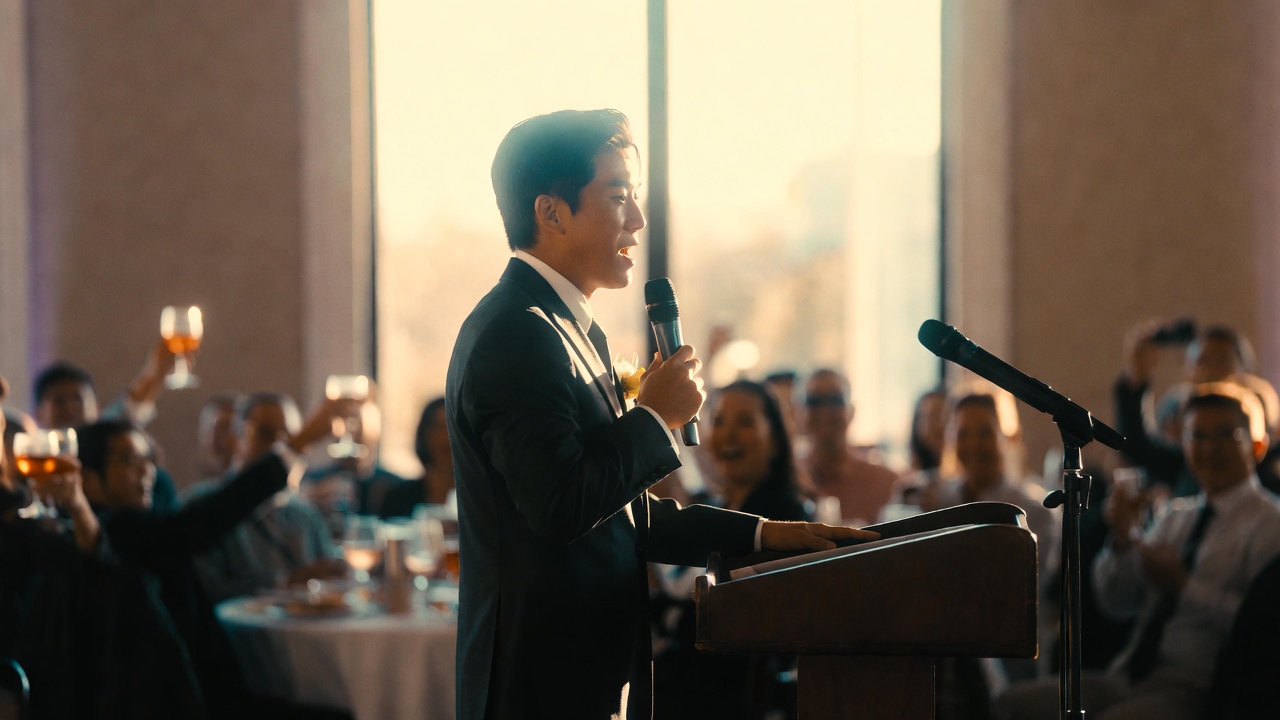
A best man speech conclusion is the last third of the toast, not a famous line you paste on at the end. The story has already proved who he is. Now you leave that scene, put his partner in the picture, make one wish the room can believe, and release everyone to raise a glass. If you keep narrating after the job is done, even a strong middle feels unfinished.
This guide is the landing only. Steal the shape. Keep one true detail. For the first twenty seconds and the bookends together, keep strong first lines and toasts nearby. For the draft that gets you to this point, use how to write a best man speech.
What the Conclusion Has to Finish
Guests can forgive a slightly messy anecdote. They remember whether you knew when to stop. The conclusion cashes the contract you made in the open: you showed a real person, now you send the room somewhere kind. That is a wedding speech, not a friendship recap with a microphone.
Think of the last minute as a runway, not a second act. Slow down. Look at the couple. Leave the story. Name both people. Make one concrete wish. Cue the glasses. Stop. If you are still explaining the friendship after you have invited a toast, you already missed the exit.
"I could keep telling you about the night Marcus drove across town because a friend had already given up. You have heard enough of that. Here is the part that matters. Priya, you did not turn him into someone else. You made the best of him easier to live with. To Marcus and Priya — may your ordinary Tuesdays stay kind, and may you keep choosing each other when nobody is clapping. Raise a glass with me. Cheers."
That close works because the story ends in one sentence, the partner gets a real line, and the wish is something they could actually live. Swap the names. Swap the one fact. Then stop talking.
The Last Third, Not Only the Last Line
The last line is the cheers. The conclusion is the turn that earns it. A perfect toast sentence stapled onto a story that never mentions his partner still sounds like a tribute to the friendship. The last third has three jobs: exit the scene, show the match, and invite the room.
Write that turn before you polish the joke in the middle. Once you know where you are going, the story gets shorter on its own. You stop collecting extra nights from ten years ago because they no longer fit the landing. Two scenes are enough for a three-to-five-minute toast. The second scene should already be walking toward the couple.
"That is the story. This is the landing. Leo has always been the person who stays until the hard part is finished. Hannah, you brought that same steadiness into the room and made it feel like home. To Leo and Hannah: may your hard days stay short and your kitchen table stay full. Cheers."
Notice how little new information arrives. The conclusion does not open a fresh anecdote. It names the trait the story already proved, gives it to both of them, and sits down in the sentence.
Where the Conclusion Should Start
Start the conclusion at the first sentence that is no longer inside the scene. If you are still describing a bar, a car, or a Tuesday from years ago, you are in the middle. The turn sounds like this: "That is who he has always been. Tonight I get to say who they are together."
Mark it on the page. Everything after that mark should be shorter than everything before it. If your landing is longer than your story, you wrote a second speech. Cut from the first true wish and keep the names. When you want to see how a full arc sits before this turn, watch the last minute of real speech samples for inspiration more than the openings.
Name Both People Before the Glass
A conclusion that only names the groom is a best-friend tribute that wandered into a wedding. Say both names, slowly. Look at them, not the back wall. If the middle was mostly about him, the last third is where his partner gets a sentence that could not be said about a stranger: one way they bring out the quality you already proved.
"If I only toasted Marcus, this would be a friendship tribute. It is a wedding. Priya, thank you for loving the version of him who shows up before he is asked. To Marcus and Priya — may you build a life that is gentle on the inside, even when the week is not. Please raise your glasses. Cheers."
Keep the partner's line kind and specific. Do not invent a private history you do not have. One true observation beats a paragraph of praise that could belong to any couple in any room.
Conclusions That Drift After the Toast
Most weak endings are not the wrong wish. They are extra words after the wish is already done.
- A new story after you have already said raise a glass.
- A roast of either partner as the last thing the room hears.
- A quote you found at midnight that does not sound like you.
- A thank-you list for the meal, the venue, or people who are not the couple.
- An apology for how the speech went, or "anyway, yeah."
If funny is your natural voice, take one light beat before the turn, then land sincere. The laugh should be over before the glasses go up. For a whole speech built that way, use speeches that hit the heart when you want the feeling, and keep the conclusion itself plain. If you only need the final twenty seconds tightened, our guide to best man speech closing lines is the last line, not this whole landing.
A Full Conclusion You Can Adapt
A full conclusion can run forty-five to seventy-five seconds if every sentence earns its place. Use this shell: one exit from the story, one line for him, one line for her, one wish, the cue. Practice it cold so nerves do not blur the names.
"I have told you one true thing about him, and one true thing about them. I will not start a second speech. Marcus, keep being the friend who makes a bad day smaller. Priya, keep being the person who makes that kindness look easy. To Marcus and Priya: may you laugh in the same kitchen twenty years from tonight, and may the people who love you still have a chair. Raise your glasses. Cheers."
Read it out loud once and cut any line that needs a wink. If it runs long, drop the first sentence before you drop the names. Guests remember how you finished. End on the couple.
Rehearse the Landing, Then Stop
Lock the conclusion early and say it until the names are muscle memory. Mark a pause before you leave the story. Mark a slower pace on both names. Look up for the wish. On the day, if you blank, skip to the names and the toast. The room will raise a glass. A perfect recap is not required.
Time the whole speech at three to five minutes, with this landing as the shortest movement. If the program is tight, cut a childhood detail from the middle before you shorten the names. When you are ready to work pace, pauses, and the microphone on top of a solid close, use public speaking tips for the wedding room so the last third lands the way you wrote it.
Frequently Asked Questions
What is a best man speech conclusion?
The conclusion is the last third of the speech: you leave the story, name both people, make one concrete wish, and invite the room to raise a glass. It is longer than a single closing line and shorter than a second speech. Once you say cheers, stop.
How long should a best man speech conclusion be?
Aim for forty-five to seventy-five seconds, inside a toast that still runs about three to five minutes. That is enough to exit the story, give his partner a real sentence, and toast. If the landing is longer than the story, cut until the names and the wish are what remain.
How do you end a best man speech without repeating the story?
Stop describing the scene and name the trait it proved. Give that trait to both people in one or two sentences, make one wish they could live, and cue the glasses. Do not open a new anecdote after you have asked the room to drink.
Should a best man speech conclusion name the bride or partner?
Yes. Say both names, slowly, and give his partner one specific kind line before the toast. A conclusion that only names the groom sounds like a friendship tribute. The last thing the room should hear is the couple, then cheers.