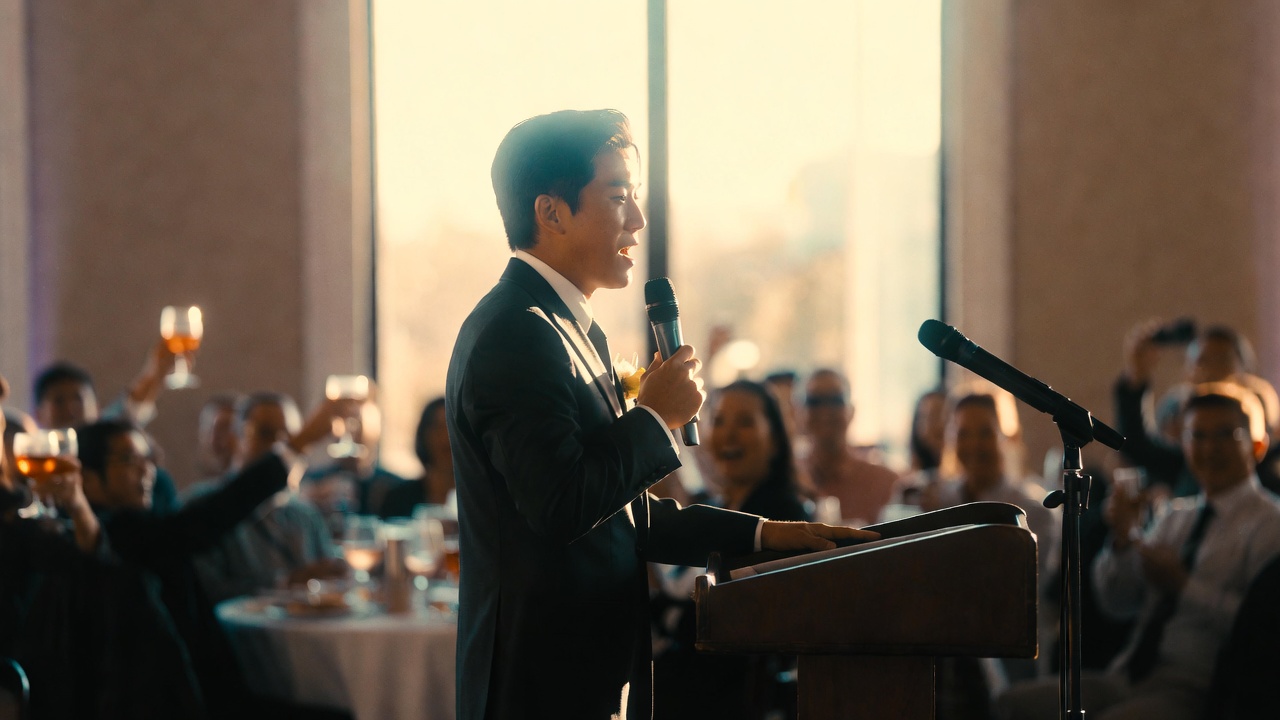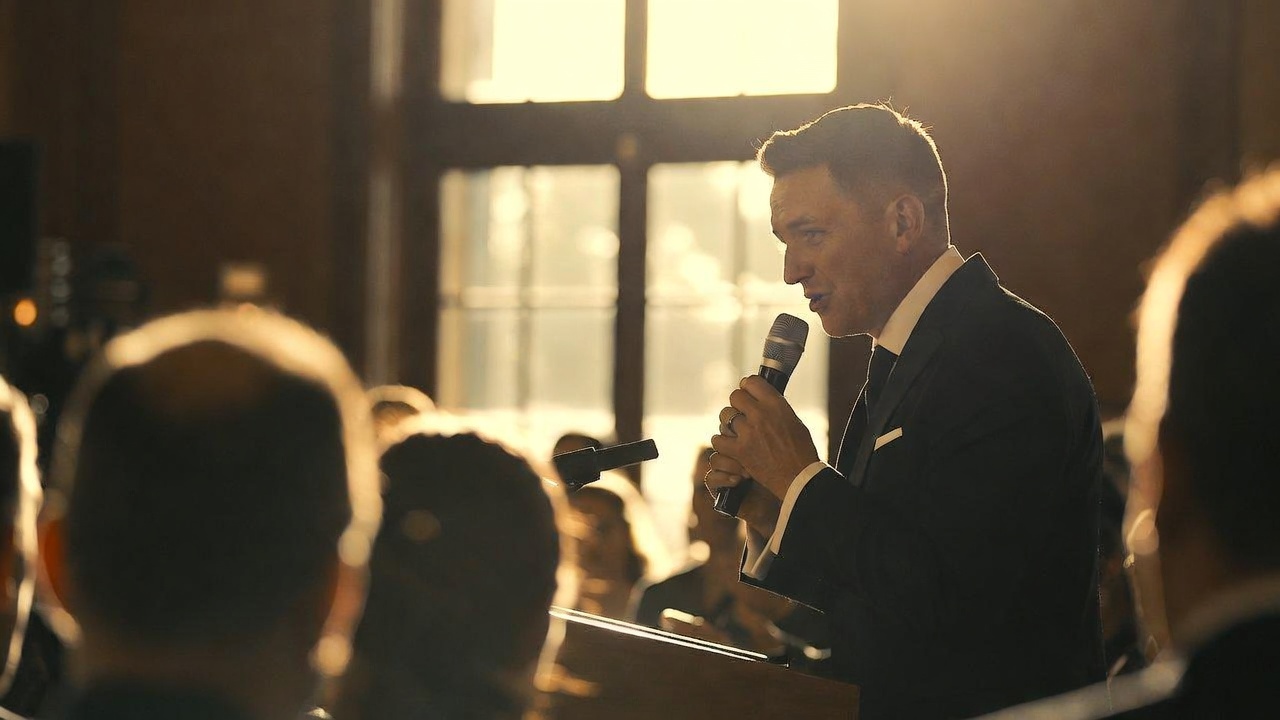
Emotional best man speeches do not need poetry, tears on command, or a string of greeting-card lines. They need one true story, plain language, and a toast that feels earned — not performed.
This guide shows what makes a speech emotional without turning sappy, how to pick the right story, full examples you can adapt, and how to end on hope instead of melodrama. Steal the shape. Keep your memories. If you still need the full writing process, start with the speech writing walkthrough, then come back here to deepen the heart.
What Makes a Best Man Speech Emotional (Not Sappy)
Sappy is vague praise said with big feelings. Emotional is specific proof said with restraint. The difference is almost always one concrete scene: the late-night call, the quiet loyalty, the way he shows up when nobody is watching.
Emotional best man speeches land when three things are true. First, you mean it — the room can hear that. Second, you prove it with a detail only you would know. Third, you leave space: a pause, a short sentence, a toast that does not oversell. Guests lean in when you understate. They check out when you stack adjectives like "amazing," "incredible," and "soulmate" without a single picture attached.
You do not need to cry to be emotional. You need to be clear. A steady voice naming one true thing will quiet a room faster than a monologue about destiny. When you want models across tones after you draft, browse example speeches you can adapt and notice how the heartfelt ones almost never sound like a movie trailer.
Choosing One True Story Over Ten Clichés
Clichés show up when you try to cover a whole friendship in five minutes. Pick one story instead. One scene that proves character will carry more weight than ten traits listed in a row.
Good story tests: Can you see it? Would half the room need a footnote? Does it end with something kind about who he is with his partner — not who he was in a phase you should leave private? If the answer is yes, no, and yes, you have a keeper.
Here is a landing paragraph that works as a middle beat once you swap the details:
"I remember the night his car died on the shoulder and he still made it to my apartment with coffee he could not really afford, because he had decided I should not sit alone with bad news. That is the version of him I trust — not the loud one, the consistent one. When I met [Partner], I recognized that same steadiness looking back at him."
That is not poetry. It is a picture. Build your speech around one picture like that, then bridge to the couple and the toast. If you are tempted to add a second story, save it for the rehearsal dinner or cut it entirely. One true story beats a highlight reel.
Emotional Best Man Speech Examples
Use these as structure, not scripts. Change names, change the scene, keep the arc: open clean, prove one trait, include the partner, toast both people. Every example is from best man to couple (or to the groom) with specifics — not "you complete each other."
Full short speech (~2 minutes):
"Good evening. For those who do not know me, I am Marcus, Daniel's best man and the friend who has borrowed his tools, his couch, and occasionally his patience. Daniel is not the loudest person in a room. He is the one who notices when someone goes quiet and checks in the next day without making a speech about it. I saw that again when he met Elena. He did not perform being in love. He just became more careful with time, more certain about home, more willing to plan a Tuesday like it mattered. Elena, thank you for matching that care. Daniel, you chose well and you keep choosing well. To Daniel and Elena — may your hard days stay short, your ordinary days feel full, and your home always have room for the people who show up. Cheers."
Full short speech with a light open, then heart:
"I promised myself I would not cry, which means I probably will, so if I pause, pretend I am being dramatic on purpose. I am Chris, and I have known James since we were teenagers trying to look cooler than we were. James once drove four hours overnight so I would not face a family emergency alone. He never brought it up again. That is his love language: action without an audience. When he talks about Priya, I hear the same pattern — quiet certainty, not performance. Priya, you did not change him into someone new. You gave that loyalty a place to land. James, stay ridiculous in the small ways and serious about the big ones. To James and Priya: may you keep building a life that is kind on the inside even when the week is hard. Cheers."
Landing paragraph (story / bridge only):
"The version of him I trust most is not the one who wins the group chat. It is the one who sat with me in a parking lot for an hour when my news was bad and his schedule was full. Watching him with [Partner], I see that same patience turned toward a future instead of a crisis — and that is when I knew this was not a phase. It was a decision he meant."
Closing toast only:
"To [Name] and [Partner] — may you keep the small kindnesses that do not make the photo album: the check-in text, the extra five minutes, the habit of choosing each other when it would be easier not to. Raise a glass with me. Cheers."
Notice none of these list ten adjectives. They pick one trait, prove it once, and toast. If you need a tighter runtime after you draft, study brief speech examples and cut until every line still earns its place.
How to Write Feelings Without Purple Prose
Purple prose is when the language tries harder than the feeling. "Your love is a lighthouse in the storm of life" sounds expensive and means almost nothing. "He still texts three weeks after the hard week" is plain and lands harder.
Write the way you talk to a friend you respect — not the way you think a wedding speech is supposed to sound. Prefer short sentences for the emotional peaks. Save longer sentences for setup. Cut metaphors unless they are yours and specific. Names beat abstractions. Scenes beat slogans.
A simple drafting trick: write the true paragraph first — the one that scares you a little because it is honest — then build the open and toast around it. If the honest paragraph only works with inflated words, it is not ready. Keep rewriting until a stranger could picture the moment. For more structure around openings and closings once the middle is solid, you can pair this guide with the rest of the cluster later; for humor that still ends on heart, see playful toast wording and steal the laugh-then-sincerity turn without forcing jokes you do not mean.
Also cut pre-apologies. "I am not good at speeches" wastes the first ten seconds of emotional capital. Start with who you are, face the couple, and go to the story.
Pairing Heart with a Light Moment
Emotional does not mean humorless. A light beat early — or a gentle self-deprecating line — gives the room permission to breathe before you go deep. The key is proportion: one small smile, not a roast set, then the sincere turn.
Safe light moments: a mild dig at yourself, a shared harmless habit, a one-line nod to nerves. Unsafe: exes, bachelor-party material that needs a warning, anything that makes the couple the punchline. Heart after laugh works; laugh after humiliation does not.
"I was going to open with a joke about how long it took me to write this, but then I remembered the point is not me — it is them. So I will only say this: [Name] once defended a terrible haircut of mine like it was a personal brand. That loyalty is why I am up here. And it is why I trust what he and [Partner] are building."
That shape — tiny smile, then proof, then couple — keeps emotional best man speeches human instead of heavy. If you want a funnier overall tone, write the heart first, then add one light line. Do not reverse the process and try to bolt sincerity onto a roast.
Ending on Hope, Not Melodrama
Melodrama predicts forever in capital letters. Hope names a future that sounds like real life: ordinary Tuesdays, shorter arguments, a home that stays kind. End on something the couple can live into — not a prophecy that embarrasses them.
Strong closings do three jobs: name both people, wish something specific, raise the glass. Skip "until death" speeches unless that language is truly yours and the room expects it. Most receptions want warmth they can stand up into, not a second ceremony.
"To [Name] and [Partner]: may your best days feel shared, your hard days feel shorter because you face them together, and your house stay full of the quiet kind of love that does not need an audience. Cheers."
Practice the last lines out loud. Slow down on names. Hold the pause before "cheers." Delivery multiplies emotion — a rushed toast undoes careful writing. When you are ready to work pace, nerves, and eye contact, see delivery tips for your toast.
One last edit pass: if any sentence exists only to make you sound profound, cut it. If it exists to make them feel seen, keep it. That is the whole craft of an emotional best man speech.
For more inspiration on this topic, explore our guide to Best Man Speech for Brother: Heartfelt Ideas & Examples — with examples, structure tips, and wording you can adapt for your ceremony.
If you want a related angle next, read more about clean best man speech examples for every wedding for additional examples and ceremony-ready language.
Couples often continue with this guide on best man speech for childhood friend: examples after drafting their core promises.
You may also find helpful wording in Best Man Speech Without Swearing That Still Lands.
You may also find helpful wording in Best Man Speech for Younger Brother: Examples That Land.
If you want a related angle next, read this guide on best man speech from father to son: words that land for additional examples and ceremony-ready language.
For more inspiration on this topic, explore our guide to Best Man Speech Bible Verse: Lines That Sound Like You — with examples, structure tips, and wording you can adapt for your ceremony.
Frequently Asked Questions
How do I write an emotional best man speech without sounding cheesy?
Trade vague praise for one specific story. Use plain language, short sentences on the peak lines, and a toast that names both people. If a line could appear on a mass-produced card, rewrite it until only your friend could have inspired it.
Should I cry during an emotional best man speech?
Only if it happens. Plan to speak clearly, not to perform tears. Pause, breathe, and continue. Guests care that you mean it — not that you break down on cue.
How long should an emotional best man speech be?
Most land best between two and four minutes spoken. Long enough for one true story and a toast; short enough that the room stays with you. If several people are speaking, aim closer to two minutes.
Can an emotional best man speech still be funny?
Yes. One light, kind moment early helps the room breathe before the sincere turn. Keep jokes gentle, skip anything that embarrasses the couple, and always end on heart — not on the punchline.
What should I avoid in a heartfelt best man speech?
Avoid exes, private struggles the couple did not clear, inside jokes that need a footnote, adjective stacks with no proof, and pre-apologies. Stay in writing and delivery — not duties, attire, or logistics outside the speech.