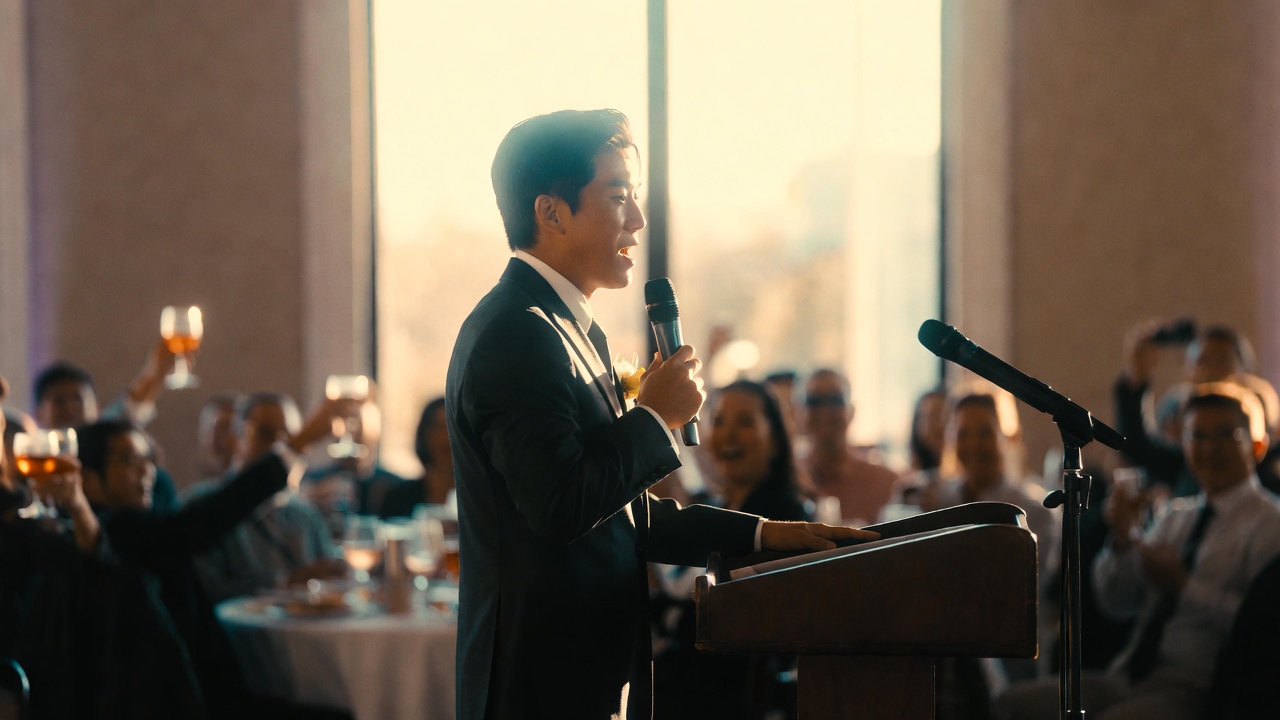
Best man speech Bisaya is not a translation contest. It is a toast in the language this table actually uses — Cebuano at the greeting and the glass, English in the story if that is how you talk, and both names said so the whole room can raise. A paragraph you copied from a phrasebook will sound like homework. One true picture will not.
Steal the bookends. Keep your scene. If the draft is still blank, start with how to write a best man speech, then come back here and put Bisaya where it earns a seat: the open, one line that sounds like this family, and the close.
What a Best Man Speech in Bisaya Is For
People search “best man speech Bisaya” because the room is Visayan, or half Visayan, and English-only will feel like you showed up in the wrong register. Bisaya here means Cebuano as families actually speak it — often mixed with English in the same breath. The job is still the same: who you are, one scene that proves who he is, his partner in that same trait, both names, a glass.
You are not the priest. You are not the emcee. You are not proving you can sustain five minutes of grammar. You are proving you know him in the language his people use when they are not performing.
How Much Bisaya a Mixed Room Can Hear
Most Filipino wedding rooms are mixed. Cebuano speakers at one table. Manila cousins at another. An English-only aunt who flew in. OFW friends who understand more than they speak. A full Cebuano draft can leave half the room smiling and lost. A full English draft can leave the grandparents waiting for a sentence that sounds like home.
Three high-impact moments beat a shaky paragraph. Open with Maayong gabii sa tanan. Park one true line in the story — a habit this family already says out loud. Close with a wish and the raise. Translate the rest only if you need a breath: “That means he shows up.” Then keep moving. If the program is tight, study short best man speeches and cut a second memory before you add a second language.
Four Beats, Two Languages
Lock the same four boxes you would lock in English. Who you are. One picture. His partner. Both names. Bisaya does not replace the spine. It colors the greeting and the glass. The story can stay in the language you can say standing up without looking down.
Write the scene first in whatever comes out of your mouth. Then add the Cebuano you can actually pronounce. If a bracket stays generic after you fill it, cut that line and put an object back in. For a shell that holds the four beats while you drop one Bisaya sentence into the open and the close, use fill-in-the-blank speech outlines and starve them — one scene, not a biography in two languages.
Best Man Speech Bisaya Examples
Hear it at wedding length. Steal the shape. Swap the terminal for your scene. Keep Saturday’s toast in the language you will not trip on. For more finished models after this, keep real speech samples for inspiration nearby and notice where they turn toward the partner — that turn still belongs here, even when the last line is Cebuano.
"Maayong gabii sa tanan. I am Carlo, Miguel's best man, and I will not take all night. Dili ko magdugay. In 2019 he drove me to the terminal at four in the morning with fried rice wrapped in foil because he knew I would skip breakfast. Mao gyud na siya: he feeds people before he talks about feeding people. Then I watched him with Andrea. Same habit. Same refusal to let someone go hungry, even when the hunger is just a long week. Miguel, stay that person. Andrea, daghang salamat. Gihigugma nimo siya sa iyang tinuod. To Miguel and Andrea — kanunay unta kamo mag-amping sa usag usa. I-alsa nato ang baso."
That is open, story, partner, raise. The Bisaya is the greeting, one character line, thanks to the partner, and the wish. The picture is English because that is how Carlo talks when he is not performing. If you are more Cebuano than this sample, you can tell the scene in Bisaya too — as long as you still name both people in a way the mixed tables can hear. If you are less Cebuano, keep the open and the close and let the middle stay yours.
Do not stack a second airport, a childhood reel, and a joke that needs a glossary. One object is enough: foil, a hallway, a charger at 1 a.m. The room will feel the language more in a clean raise than in a paragraph you practiced in the bathroom mirror and still do not own. If he is quieter than Miguel in this sample, shorten the praise and keep the rice. If you are funnier, one owned habit can live inside the story — not as a fifth section after the glass.
Lines You Can Steal the Shape Of
Brackets are prompts, not lines you read. Fill the scene before you fill the Cebuano. If a Bisaya blank stays something you would never say at the table — a proverb, a vow that belongs to them, a line you found at midnight — cut it. Keep the greeting you can land. Keep the wish you can say looking at them.
"Maayong gabii. Ako si [Your name], [Groom]'s [brother / friend]. Dili ko magdugay. The version of him that matters is [one place, one year, one thing he did]. Mao gyud na siya: [one short mixed line]. Then I watched him with [Partner]. Same [trait]. [Groom] ug [Partner], kanunay unta kamo mag-amping sa usag usa. I-alsa nato ang baso."
Useful Cebuano you can actually place: Maayong gabii sa tanan for the room. Dili ko magdugay if you need a short promise. Mao gyud na siya as a hinge after the picture. Daghang salamat to the partner. Kanunay unta kamo malipay or mag-amping sa usag usa as the wish. I-alsa nato ang baso for the raise. Hangtod sa kahangturan is vow language — leave it unless that is how this family already talks. If the first and last lines still feel thin, steal a pair of bookends from strong first lines and toasts and drop one Cebuano sentence into each, not into every paragraph.
What to Cut Before You Mix Languages
Cut the paragraph you translated at midnight. Cut Tagalog po if this table is Cebuano and you are performing respect you do not use the rest of the week. Cut a roast that only works in English sarcasm. Cut inside jokes that need a glossary for the English-only relatives. Cut a guest-list thank you in two languages. Kindness still needs an exit.
Do not borrow a Manila closer and call it Bisaya. Mabuhay ang bagong kasal is a Filipino line some mixed rooms like. It is not Cebuano. If you want the glass to sound like this family, keep the Cebuano wish and sit down. After the fat is gone, the close should still fit in one breath.
"Miguel ug Andrea, kanunay unta kamo malipay. Amping kamo sa usag usa. I-alsa nato ang baso."
That is the landing after the cuts. Both names. One wish. The raise. If you cannot say it without looking down, shorten it again. A mixed room will forgive a slightly English middle. They will not forgive a long, shaky translation that never arrives at the couple.
Keep the Toast on the Couple
Language is a doorway, not the house. After the greeting, tell the Tuesday story that proves who they are. Name both people in the close. Make one wish they could actually live. Cue the glasses. Stop. If you are still explaining Cebuano after you have invited a toast, you already missed the exit.
If the Bisaya wants to get tender, that is allowed — as long as the last sentence is still about them. For wording that stays specific instead of sappy, keep speeches that hit the heart nearby, then come back here and cut the extra proverb. End on the couple, then sit down.
You may also find helpful wording in this guide on best man speech conclusion: land the last third.
Frequently Asked Questions
Should a best man speech be in Bisaya?
Use Bisaya if that is how this family actually talks. Open in Cebuano, keep one true line in the story, and close with a wish both names can carry. A mixed room does not need a full Cebuano draft. It needs a toast it can raise. English in the middle is allowed if that is your real voice.
How do you start a best man speech in Bisaya?
Maayong gabii sa tanan is enough. Then name yourself and how you know him. Dili ko magdugay is a clean promise if you tend to ramble. Do not open with a proverb or a joke that needs a glossary. Greet the room, then get to one picture.
How do you toast the couple in Bisaya?
Name both people, make one short wish, and raise the glass. Kanunay unta kamo malipay or kanunay unta kamo mag-amping sa usag usa will carry. I-alsa nato ang baso is the cue. Hangtod sa kahangturan is vow language — leave it unless that is how this family already talks.
What if some guests do not speak Bisaya?
Keep Cebuano at the greeting and the close. Tell the story in the language you can say standing up. A one-breath aside is enough if a line needs it: that means he shows up. Do not translate every sentence. Mixed tables will follow names, a picture, and a glass.
How long should a Bisaya best man speech be?
Two to three minutes standing, same as any other toast. Language is not a reason to run long. If you are over three minutes, you added a second story or a paragraph of translation. Cut those before you cut the names.
Can I mix Bisaya and English in a best man speech?
Yes. That is how a lot of Visayan rooms already talk. Mix on purpose: Cebuano for the open and the wish, English for the scene if that is how you tell it. Do not switch every other word to prove fluency. Own one picture. Land both names. Sit down.